Crop
Reshaping the delivered rectangle at the desk: its orientation, aspect ratio, and how close the frame stands to the subject.
FinalFrame는 모든 사진을 0–10으로 채점해요. 6은 탄탄한 수준, 8은 포트폴리오에 어울리는 수준, 9는 전시 등급이에요. 채점 방식
진짜 정체
Every photograph is composed twice. Once at the shutter, where position, lens, and the moment fix the geometry forever, and once at the desk, where the rectangle itself goes back on trial. The crop is that second trial, and it rules on three things at once: what survives inside the frame, what shape the frame is, and how close the picture stands to its subject. The composition lesson owns the first question: where attention travels, what the edges exclude. This lesson owns the other two, because they are the decisions most frames never receive: the shape and the standing-distance of the final rectangle are choices, and a frame that skipped them was only half composed.
Here is the uncomfortable fact underneath. The rectangle the camera hands you was not composed either, 3:2 is an inheritance from the dimensions of 35mm film, an engineering fact a century old, not an aesthetic decision. A photograph delivered at 3:2 because the camera shoots 3:2 has had its most fundamental formal property, the proportions of the canvas, decided by nobody. Sometimes 3:2 is right. But right-by-decision and right-by-default are different photographs on a judging wall, because one has a container that fits its subject and edges that were sealed on purpose, and the other simply ships in the packaging it arrived in.
And the crop is the one compositional control that survives the shutter. Position, perspective, the overlap of one element on another: settled forever the instant the frame was made. The rectangle: still yours. That is what makes cropping the most powerful move left on the desk, and the most abused: it is composition's only lever in post, so it gets pulled for everything, including the things it cannot reach.
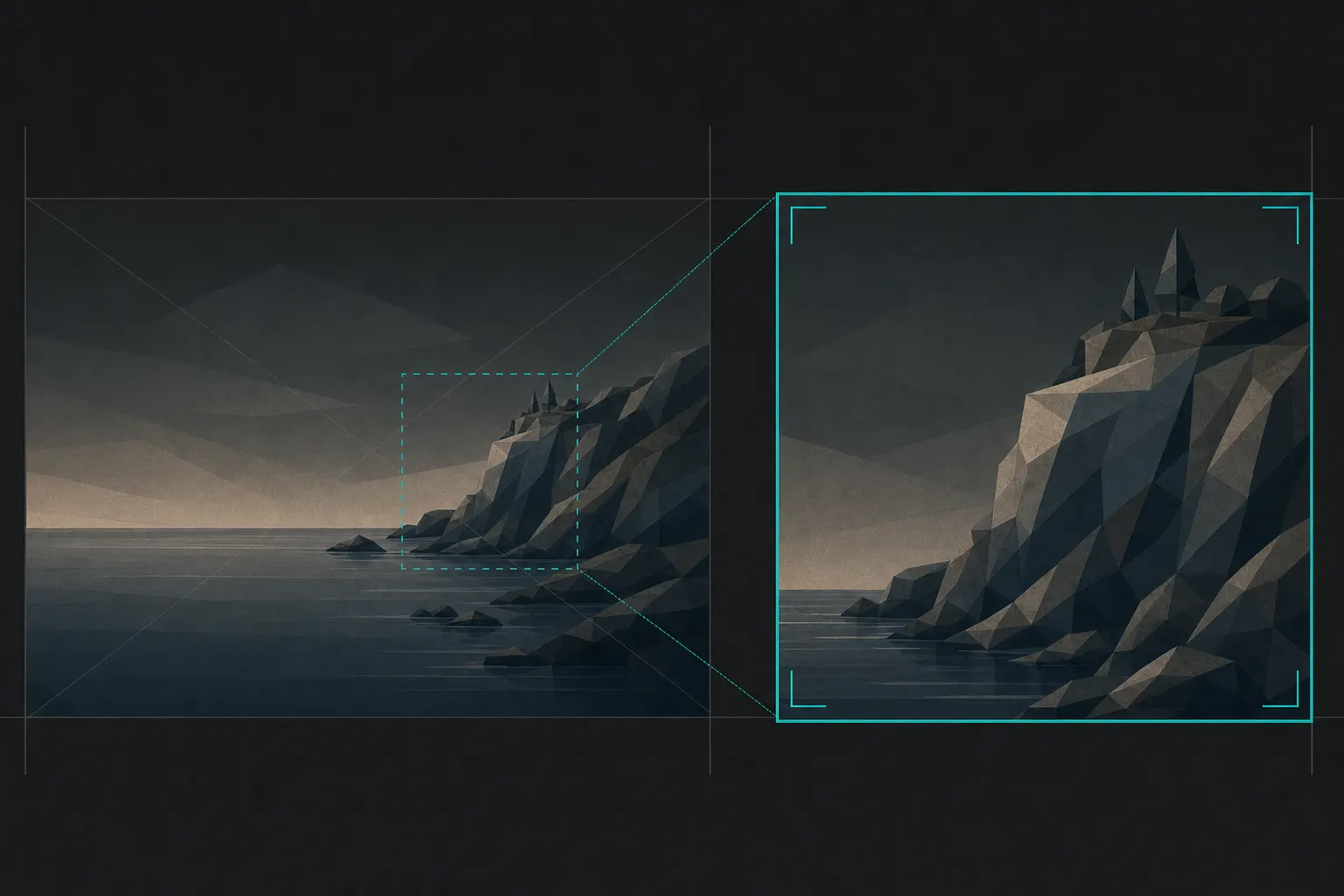
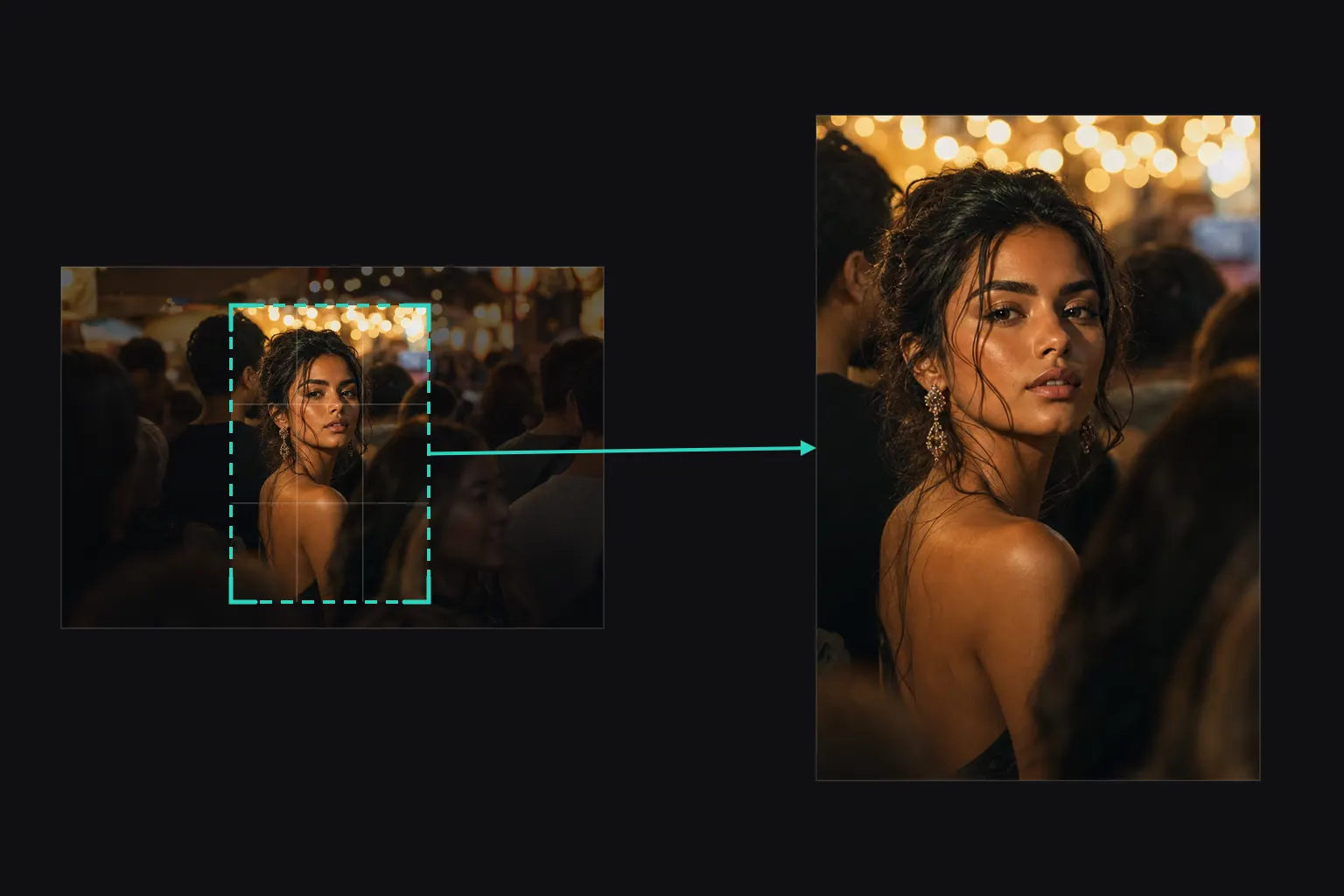
AI 생성
6과 8을 가르는 것
The 6 is the salvage crop. Something bothered the frame (a bright car at the border, a slab of dead pavement) so one edge moved inward until the problem fell off, and the job was declared done. Look at what that operation actually produced: the distraction is gone, and nothing was decided. The subject still sits wherever the old frame left it, now with less air around it. The aspect ratio is whatever arbitrary rectangle the chop happened to leave behind. The headroom is uneven because nobody looked at it, and the three borders that didn't move were never walked again. It is a removal wearing a crop's clothing (subtraction without recomposition) and it announces itself: the frame reads as a photograph that had something cut off, which is exactly what it is.
The 8 treats the crop as a second composition, made with the same seriousness as the first. Orientation checked against the subject instead of inherited. A ratio chosen because the picture reads that way, not because the file opened that way. The subject re-placed inside the NEW rectangle: its position argued against the new edges, not left where the old frame put it. Air set on purpose: room ahead of the gaze, a deliberate margin above the head, all four borders patrolled corner to corner like a viewfinder. The judge's tell is a single question: can I see that this was cropped? On a 6, yes: the frame carries the scar of the removal, an odd ratio here, a cramped border there. On an 8, no: the rectangle reads as the frame the photographer wanted from the beginning, and nothing in it testifies otherwise. A crop that hides itself completely is the whole distance between the two scores.
셔터를 누르기 전에
Use the crop tool as an instrument of looking before it becomes a tool of cutting: the digital descendant of the two L-shaped cards editors have slid across contact sheets for a century. Three diagnostics, all before anything is committed.
Interrogate the borders you have. Walk the existing frame's four edges and ask of each one: what is this border earning? An edge earns its keep by containing something that matters, or by holding air the subject needs. An edge that contains only more of nothing (slack sky, empty foreground, blank wall) is a candidate. This is the composition lesson's edge patrol pointed at a different question: not "is this edge clean?" but "does this edge deserve to exist?"
Try the other orientation on purpose. Rotate the crop vertical inside your horizontal, or the reverse, and drag it across the frame slowly. The most commonly missed photograph in any file is the one standing at ninety degrees to the one taken: a standing figure in a horizontal frame is usually a vertical photograph wearing the wrong container, flanked by two dead margins where the picture isn't. The subject's longest axis is the vote that matters: a subject taller than it is wide is arguing for a tall rectangle, and the argument is usually right.
And run the decisions in the correct order: subject first, rectangle second, ratio last. Trace the subject's full extent, including everything that trails: hands, wingtips, a cast shadow, the direction a gaze leads. Then place the keep-rectangle: what must survive, with its air. Only then snap a ratio to the rectangle you found. Run it backwards (pick 4:5 because the destination wants 4:5, then force the picture into it) and the container starts making the decisions: something gets amputated, or drowned in dead space, to satisfy a shape that was chosen before anyone looked.
촬영에서
The capture side of this lesson is short, because the composition lesson already said the load-bearing thing: compose in the viewfinder, seal the edges there, and treat the crop as refinement, never as the plan. Two additions belong to cropping specifically.
Buy crop room when the moment moves faster than the framing. Action, street, anything alive and unrepeatable: frame a step looser than the final picture and spend the margin at the desk. Make it a priced decision, not a habit: the margin costs pixels, and looseness as a default quietly outsources composing to the chair. Frame tight when the scene holds still; buy margin when it doesn't; know which one is happening.
And commit to orientation at the scene, because it is the one framing decision the desk pays double for. Turning the camera is free; extracting a vertical from an untouched horizontal keeps well under half of the frame, and the price runs the same the other way. When a scene reads both ways, shoot it both ways: two frames cost nothing at capture, and the choice arrives at the desk intact. When the delivery shape is known in advance (a square feed, a 4:5 print), many cameras can display the target ratio as a guide: compose FOR the trim, so the crop is executed at the desk but decided at the scene.
보정에서
Start where the composition lesson hands over. Recrop to move the subject off a dead placement, to seal a leaking border, to cut the tangent: that is eye-path work, and its rules live there. What this lesson adds are the decisions that make the recrop a composition rather than a correction, and they run in order.
Orientation first: match the container to the subject's longest axis. A vertical subject in a horizontal container forces a choice between amputation and acres of dead margin: a shape war the subject always loses. Then the ratio, chosen for what each shape does. 3:2 is the wide native rectangle: it carries environment (subject AND place) and its width turns to dead weight around a single centered subject. 4:5 is the shape of the classic 8×10 print: less elongated than the native 2:3 vertical, it trims the stretched-out top and bottom a figure leaves in that taller frame, which is why portraits gravitate to it. The square deletes direction itself (no long axis, nothing to travel "along") which serves centered, symmetric, graphic subjects and starves anything that needs a route. The wide panoramic shapes trade the vertical dimension for lateral sweep: skies and foregrounds go scarce, layered depth stacks poorly, so they suit scenes that genuinely read left-to-right. None of these is better; each is a claim about how the picture reads, and the honest question is which claim this frame can keep. The ratio should follow the picture, and when a platform will impose its own shape anyway, crop for it deliberately, because a platform's automatic center-crop is nobody's composition.
Then the air. Give the subject room on the side it faces or moves toward: a gaze pressed against its own border reads as a wall the picture built by accident. Headroom is a decision at both extremes: generous can be deliberate isolation, and none at all can be deliberate pressure (a tight crop into the top of the head is a legitimate, confrontational choice) but a border that merely grazes the hairline is neither: it is the tangent flinch, relocated to the frame edge. Never end a figure at a joint, wrist, ankle, knee, elbow: a mid-limb cut reads as framing, a joint cut reads as amputation. Don't close in on the subject from both opposing sides at once: trim decisively from one direction; symmetric pinching reads as the frame shrinking onto the subject rather than the subject being placed. And when the subject's true edge is uncertain, err looser: a slightly loose crop is a composition; a crop that clips the subject is a defect.
Know what a reframe is: a re-edit. Take the 3:2 and deliver its square, every pixel of the subject preserved, and a different photograph: new edges, new balance, new negative space, a new set of instructions to the stranger's eye. It will be judged fresh, and it should be: the next verdict answers the new composition, not the old one. That is the point of doing it, and also the warning that comes with it: reshaping the frame reopens every compositional question, including the ones the old shape had already settled.
The judgment that decides the score, though, sits above all the mechanics: is this crop a rescue or a crutch? A rescue finds the smaller, better photograph that was hiding inside the frame (complete, with its own placement, its own air, its own sealed edges) and it can name its win in one sentence. When the frame's one flaw is what the borders contain (clutter bidding from the edges, a subject drowned in slack space, a competing element the picture can live without), the crop is not a compromise; it is the precise tool: the one composition fix that lives in post. A crutch is a rectangle doing a leg's job, and it has tells. The crop deepens with every pass: cropping in installments, each version a little tighter, is a search for a photograph that is not in there. The crop only removes: nothing gets re-placed, so the fix is subtraction wearing composition's clothes. Or the crop is fighting geometry: cropping tighter to manufacture intimacy delivers magnification without proximity, because a crop shows exactly what a longer lens from the same spot would have shown, and never what walking closer would have changed. The perspective still testifies to where the camera stood.
Which is the honesty clause, with the ceiling named. A crop only subtracts. It cannot add coverage the frame never held, cannot un-merge shapes, cannot move the camera after the fact: the composition lesson's clause, and it binds twice as hard here, because the crop is the tool most often asked to fake all three. And cropping is the one edit that visibly spends the file: keep half the frame's width and height and three-quarters of the pixels are gone; everything that remains (noise, softness, every capture flaw) is enlarged toward the viewer along with the picture. A deep crop therefore has to clear two bars at once: a better composition AND a file that survives the enlargement. Check the second bar honestly: punch to 100% inside the candidate rectangle before committing, because past a point the smaller, better photograph is also a worse file, and the rescue quietly becomes an enlargement of everything wrong with the capture. When the composition the frame needs sits deeper than the file can afford (or when the flaw the crop keeps chasing lives in position, perspective, or a moment that never entered the pixels), the frame is capture-limited, and the honest fix is the one no rectangle performs: closer, or wider, or turned ninety degrees, at the next shutter.
실력의 사다리
- Beginner: ships the camera's rectangle. Every frame delivered in the shape it was captured; the crop tool opens only when something obvious needs chopping off, and closes the moment it's gone.
- Competent: crops to clean. Distractions trimmed, horizons squared, borders tidied: the salvage crop, executed well. But the ratio is whatever the trim left behind, the orientation is never revisited, and the subject stays wherever the old frame put it.
- Strong (the serious desk habit): recomposes at the desk. Orientation tested against the subject, ratio chosen on purpose, subject re-placed against the new edges, air set deliberately, every new border patrolled. Each crop can state what it wins, and none of them reads as cropped.
- Advanced: frames for the crop before the shutter. The delivery shape previsualized at capture, margin bought knowingly when the moment runs fast, both orientations taken when the scene reads both ways, and the rescue-or-crutch line read at a glance: five seconds to know whether a frame holds a smaller photograph or needs a wider reshoot.
찍으러 가세요
One frame, no sliders. Go into your catalog and pull a frame a critique flagged for composition, clutter, or subject-separation, or, failing that, your busiest keeper: a real subject with too much happening around it. The crop tool is the only control you may touch. The crop is the only variable, because the crop is the lesson.
Build five versions. One: the salvage crop (remove the single worst distraction and change nothing else); that is your control. Two: the opposite orientation, dragged across the frame until it finds its strongest case. Three: the square. Four: the radical crop (the smallest photograph inside the frame you would still defend, subject re-placed against the new edges, air re-set, all four borders patrolled). Five: the loosest crop that is still a decision rather than a default. Then judge the set like a wall. For each version, name what it WINS, not what it removed; a crop that can only name a removal is the control wearing a costume. Walk each rectangle's borders. Check the air: ahead of the gaze, above the head, at the joints. And collect the price: punch to 100% inside the radical crop and rule honestly on whether the file survived the enlargement. Notice which of the five wins. It is rarely the salvage crop, and rarely the shape the camera chose.
Then close the loop: re-critique the winner (just that one frame). You likely arrived here because a critique suggested a reframe (the crop overlay on your result) or named composition, clutter, or subject-separation as the ONE bottleneck; those are the three a decisive crop can actually move, and this desk-side shoot is the experiment that tests the diagnosis. If the second composition is real, the next critique names a different bottleneck, the crop suggestion should go quiet (nothing left to trim toward) and the FinalFrame Score has room to move with it. And if the same bottleneck is named again, that is information, not indictment, and with a crop it teaches in one of two specific ways: either the rectangle only removed and never re-composed (subtraction, not composition) in which case rebuild version four as a placement decision rather than a deletion; or the flaw the crop kept chasing lives in the geometry, in where the camera stood, where no rectangle reaches: the frame is capture-limited, the desk has done all it can, and the fix is waiting at the next shutter with your feet under it. Both are worth one re-critique to know. The score is not the reward: the moved bottleneck is.