AI vs human photo critique: what a chatbot, a critique tool and a human each catch
An AI photo critique is as good as what is built and measured around the model. A general chatbot answers the question you typed. FinalFrame measures the photo first, asks it the same fixed questions every time, and tests its reads on photos whose faults are already known. What you get is a measured second opinion against a standard you choose: one named problem, the slider values for it in your editor, and a call on whether more editing is worth it, so the next edit has a direction. A human critic still wins on intent and on whether the picture lands.
If you have ever pasted a photo into a chatbot and asked "what do you think?", you may recognize the answer the photographers who tested ChatGPT in late 2025 describe: a warm opening, a list of what works, and a gentle suggestion or two. A critique in the sense this page uses puts fixed questions to the photo every time, measures its technical state, names one problem, and decides what to do next.
If you are choosing where to send the next photo, this page gives FinalFrame's measured figures, dated, what a chatbot's reply looks like under the same request, and where a person still does better.
What an AI photo critique is, and how it differs from asking a chatbot
A general chatbot answers the prompt it gets. Give it a photo and a vague question and it picks what to talk about. TechRadar's Peter Fenech, a former editor of Digital Photographer, ran exactly this test in December 2025 and summed up the first round in one line: "given a generic prompt, it's likely to keep feedback generic." Longer prompts that named his intent got him more targeted replies. (TechRadar, 31 Dec 2025)
A better prompt gets you a better-shaped answer; Fenech found exactly that. What FinalFrame adds is not in the prompt. It measures the photo before the critique is written: it reads the camera data in the file, and it checks focus on the detail that matters, up close, as a step of its own. Then every critique answers the same fixed questions, in a fixed order, so what the read covers does not depend on how well you asked. FinalFrame runs on an OpenAI model, as its Terms say. The model is one part of the result. The measuring before it writes, and the testing of what it writes against photos whose faults are already known, are the rest; the next section gives the figures.
Three questions matter most here. Is the frame sharp where it matters, and is the problem a reshoot or a desk problem: the 2 reads we test hardest. Which one problem costs the frame most, named from a fixed list and chosen by what it costs the frame in the lane you pick: the standard you ask to be measured against (Clean & Natural, Mood & Style, Print Ready, Competition Ready, Social or Client Delivery). And should you keep editing: a stop flag with its reason, plus a worth-it call that is a yes or a no. With the answer comes what to move: slider values for that one problem, in the editor you set in your preferences (Lightroom, Capture One, Photoshop and others); upload the edited version and the next critique says whether that problem is resolved, partly resolved or still there. You can type those questions into a chatbot; what you cannot type is the focus check behind the first, the testing on photos with known faults that the next section reports, or a measurement of what your edit changed: each new version is scored on its own, then measured against the one before, and re-uploading the same file is flagged as the same image.
Where AI critique is strong, and how we know
Start with the technical read. Fenech's closing view was that "AI is very good at technical analyses," but he tested his own finished frames, and none of the write-ups we found tried a photo with a known fault. (TechRadar; Amateur Photographer, Nov 2025; Venture Photography, Nov 2025) So we tested ours. In our last full focus test, run in September 2026 on an earlier version of the critique, 16 clearly soft photos were read 5 times each: it caught the softness on 75 of the 80 reads, and in 100 reads of 20 sharp photos it never once called one soft. In an October 2026 run, on files that carried their camera data, it detected a real capture limit on all 45 reads of the 15 photos that had one, and made 0 false reshoot calls in 132 reads of 44 photos where a style choice or a fixable flaw must not be read as one. These are our own photos and labels, picked to be hard; your photos are not in the set.
The second is the stop. On a first critique FinalFrame checks a fixed set of stop conditions, and it can say stop early when the frame carries a capture-level limit, a fault fixed at the moment of the shutter such as focus that missed the subject, that no edit can lift; then the reason names the limit and the frame is marked not worth the hour. Few friends will tell you to stop editing a photograph you are visibly enjoying, and the mentor who would is not always on hand; the flag puts that call in every critique. The lesson on reading that flag is stop editing.
The third is the score itself: does it put a flawed photo below a sound one? In October 2026 we scored 42 photos from the labeled test sets we check each new version of FinalFrame against: 16 with a known flaw (15 of them a focus problem) and 26 without. In 412 of the 416 pairings of a sound photo with a flawed one (99%), FinalFrame scored the sound photo higher; sound photos averaged 7.0, flawed photos 5.4.
On the same photos, GPT-6.1 Sol at low effort, given only the photo and a short request for a critique and a 1-10 score through OpenAI's API (not the ChatGPT app), averaged 7.7 for the sound photos and 6.7 for the flawed ones (7.7 and 6.6 at high effort): about 1 point between the groups, where FinalFrame put 1.6. The method, the prompt and every photo's scores: how we tested.
The plain model is a capable model given a few sentences of instruction; put FinalFrame beside it and what you see is what is built around a model, not which model is better. What it builds around the model is a critique meant to be used as a reference: a score that drops when the photo has a flaw, one named problem, a call on whether more editing is worth it or the frame needs a reshoot, the change that would move the score most, and slider values for the next edit in the lane you chose. The two photos below show where a plain reply and its score can come apart.
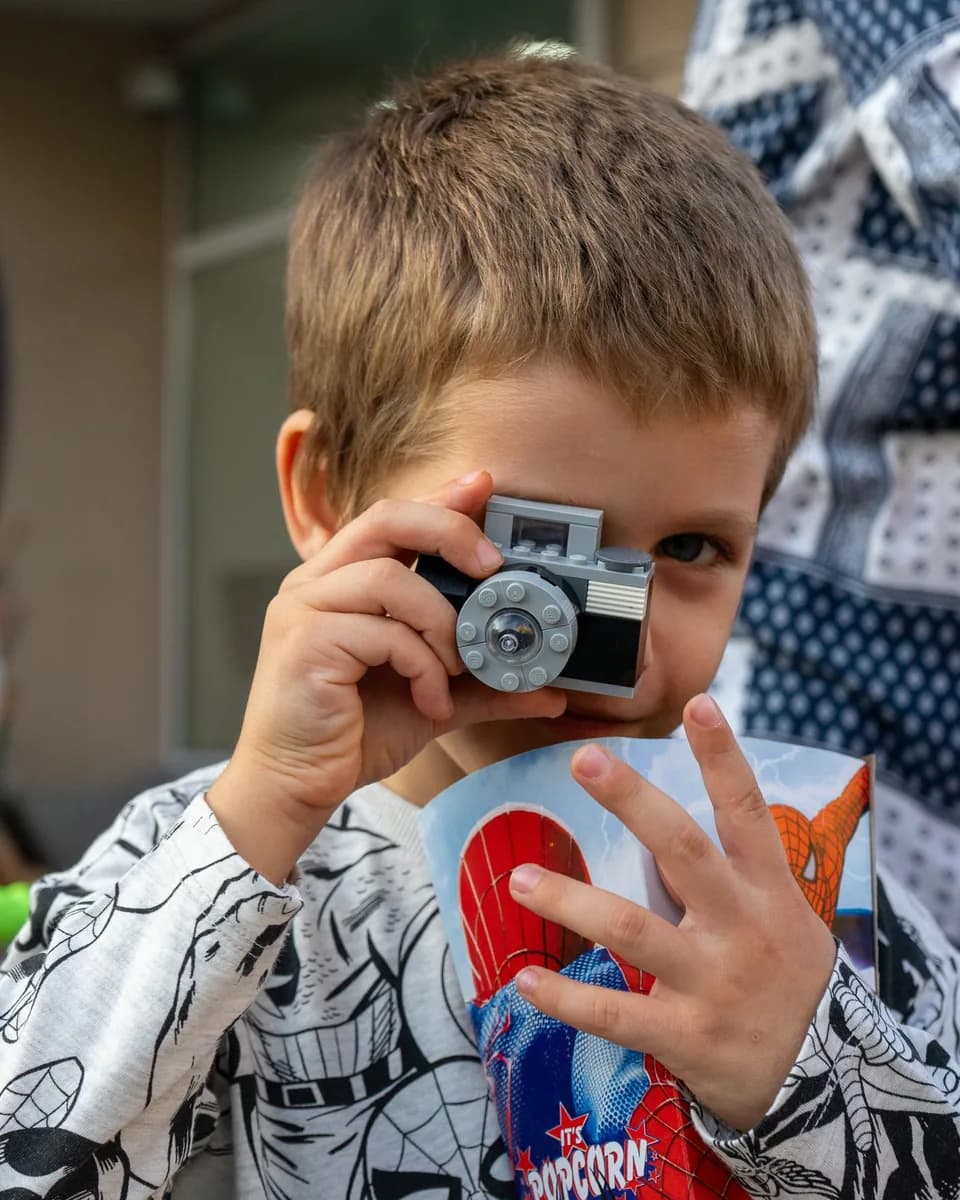
Two of the flawed photos: what each wrote, and what each scored
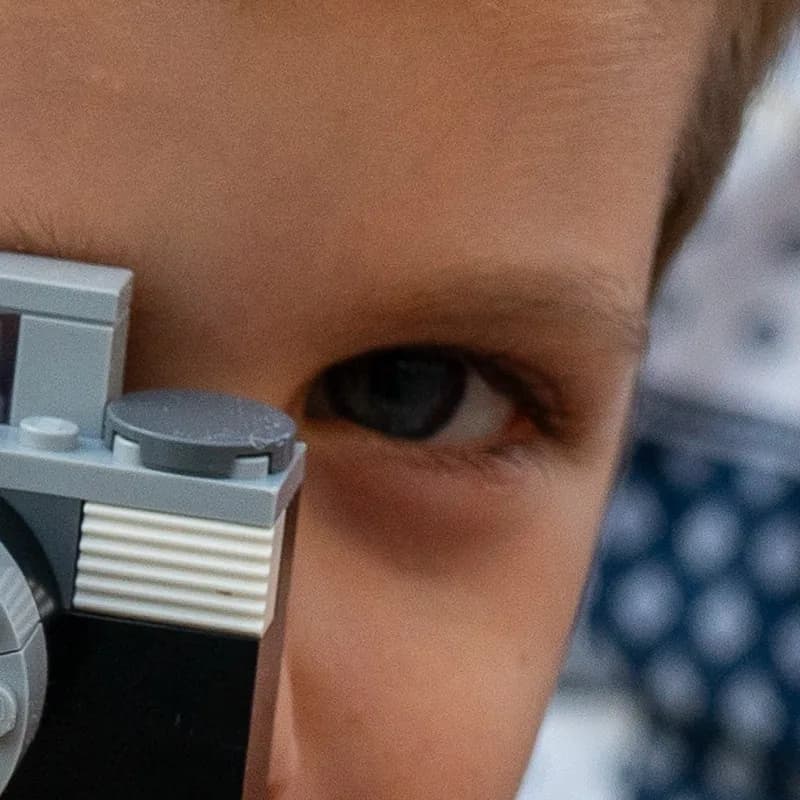
The eye, close up, from the same file.
Plain GPT-6.1 Sol (OpenAI API, low effort): 7.8/10. FinalFrame (Clean & Natural lane): 5.5/10. One read each, October 2026.
GPT-6.1 Sol (OpenAI API, low effort)
7.8/10
GPT-6.1 Sol: "Focus is good where it matters, with pleasing detail in the hair, eye, and hands." Its biggest problem: "The single biggest thing holding it back is the distracting background figure on the right."
FinalFrame
5.5/10
FinalFrame: "the one visible eye has to carry the whole portrait, and it is not crisp enough for a clean portfolio image." And its verdict: "I would not spend much more time editing this version; the idea is worth reshooting with the eye nailed."
The plain model praised the focus and scored 7.8. FinalFrame named the soft eye as the limit, scored 5.5, and said reshoot rather than keep editing: its words and its number say the same thing.
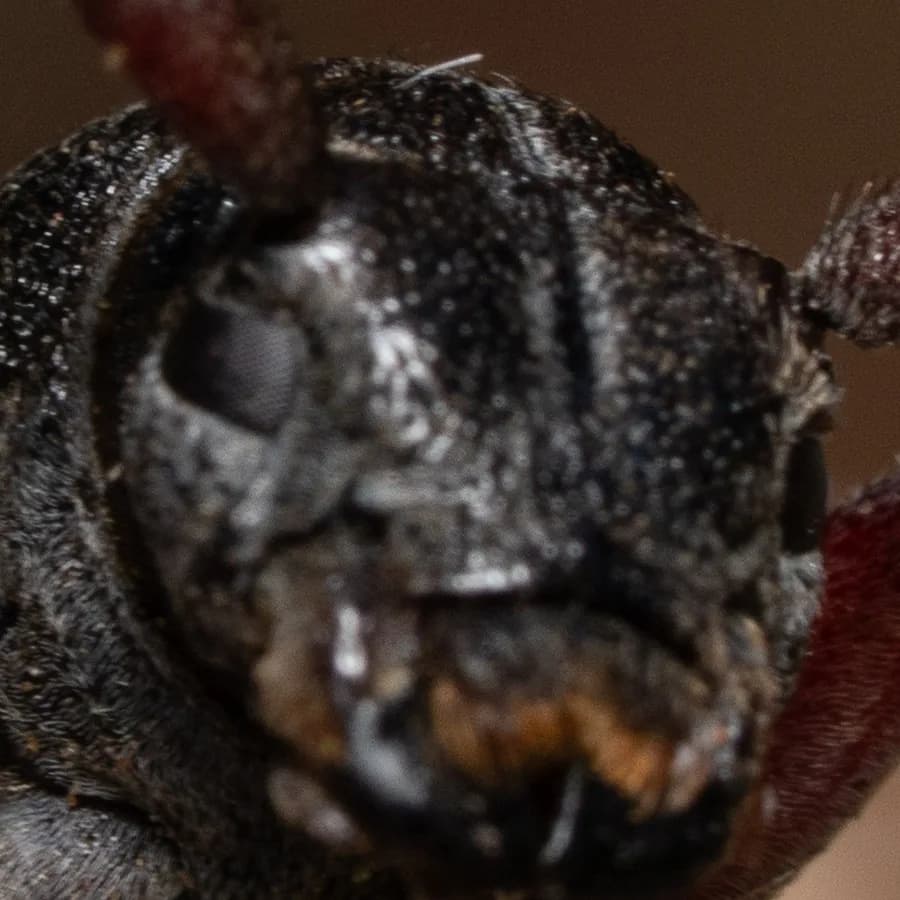
The eye, close up, from the same file.
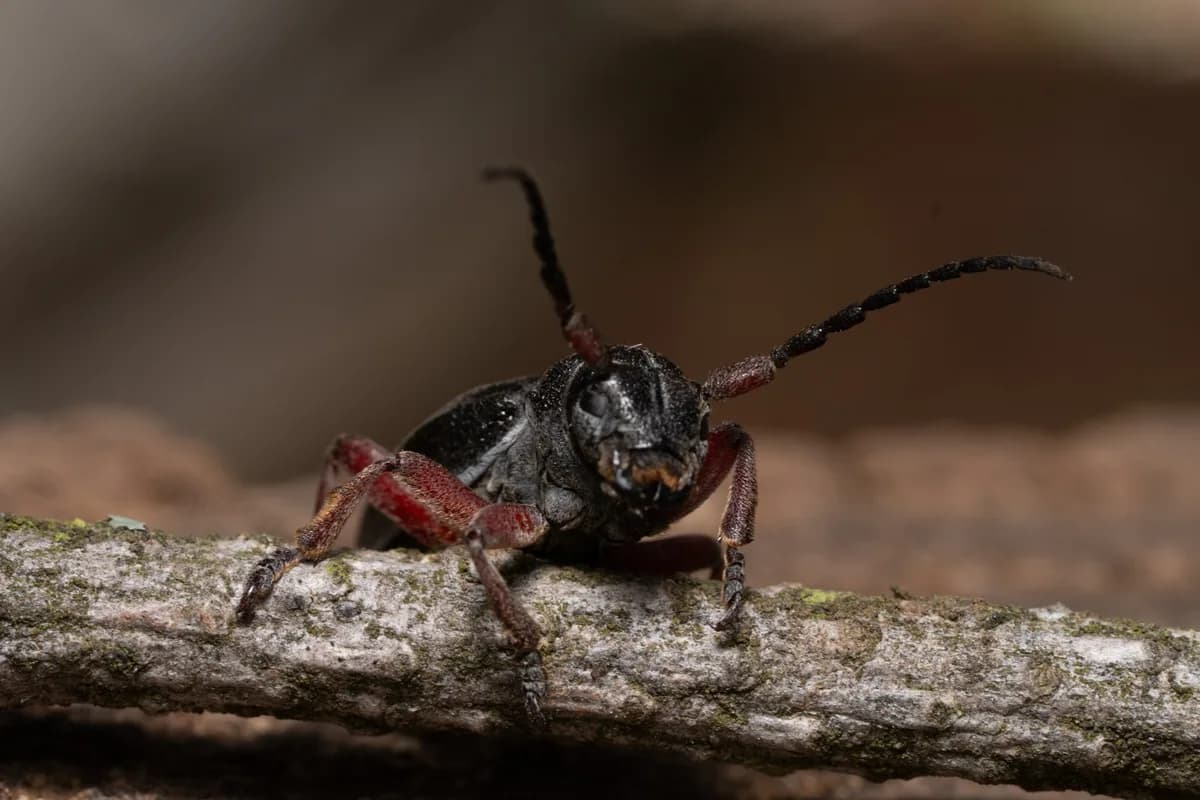
Plain GPT-6.1 Sol (OpenAI API, low effort): 7.3/10. FinalFrame (Clean & Natural lane): 5.6/10. One read each, October 2026.
GPT-6.1 Sol (OpenAI API, low effort)
7.3/10
GPT-6.1 Sol: "The single biggest thing holding it back is the lack of crisp detail around the eyes and face. Those are the natural focal points, but they look slightly soft …"
FinalFrame
5.6/10
FinalFrame: "the face/eye area does not resolve with enough precision." And its verdict: "sharpening and local contrast will not turn this into a crisp portfolio piece."
Here both named the soft face. The plain model, which had called the toy camera's focus good, scored this one only half a point lower: 7.3 against 7.8. FinalFrame's 5.6 says what its words say, and that sharpening will not fix it.
Try it on a photo you have already judged yourself: one named problem, a yes or no on whether more editing is worth it, and the reason when it says stop. Then compare it with what you would have said.
किसी फ़ोटो की समीक्षा कराएँThe same request in the ChatGPT app
The test above went through OpenAI's API. Most people ask in the ChatGPT app instead, often with their earlier chats and Memory behind it. So we typed the same request by hand into the app, on a paid account with Memory on, using the model and setting the app opened with (GPT-6, Medium). We asked about the 2 example photos above, picked because the API model's score was among the furthest from ours, and 1 sound photo from the same set, 3 times each, in a new chat every time.
The app's scores barely moved from one chat to the next: 7.6, 7.6 and 7.8 for the sound photo, 7.2, 7.2 and 7.1 for the toy camera, 7.2, 7.4 and 7.2 for the beetle. In each of the 3 rounds it scored the sound photo above both flawed ones, by 0.2 to 0.7 points. None of the 3 replies on the toy camera, the photo whose focus had missed the eye, noticed the soft eye: 2 called the focus good ("The focus is reasonably sharp"), the third praised the detail in the hair, hands and toy camera, which is where the focus fell, and all 3 blamed clutter. On the beetle, its words moved more than its numbers: 2 replies named soft focus on the face, and the third named a different problem, "The beetle's face is too dark", and suggested lifting the shadows; the score stayed between 7.2 and 7.4 either way.
Because those 2 examples were picked for large misses, we added 2 photos that were not: a donkey portrait from our own calibration set, with an ordinary flaw (flat, bright light and a near-blown sky), and a second sound photo, a sunset panorama, 3 chats each. On the donkey, the app named a different main problem in each of the 3 chats: the light, then the empty space, then the donkey's head against the trees behind it; each a fair point about this photo, 2 of them in our founder's own grade, but a different one each time. FinalFrame, run 3 times on the same file, named the bright sky outranking the face every time, scored it 7.0 each time, and gave the same edit plan each time. On the panorama, the app's 3 replies and FinalFrame's 3 runs all pointed to the dark foreground. On these 2 photos the app's scores sat within half a point of FinalFrame's; the large gaps on the toy camera and the beetle were on the 2 photos picked for large misses.
Through the API, GPT-6.1 Sol had scored the first 3 photos 8.2, 7.8 and 7.3 at low effort. The app run differs from that in more than Memory: a different model (GPT-6, not GPT-6.1 Sol), a different effort setting, and whatever the app adds to a chat. It was one account, the founder's, with Memory on, so earlier chats may have shaped later ones. So this shows what you get from ChatGPT as you would use it, not how much Memory alone moves a score. The scores are on how we tested.
Three ways to get a photo critiqued
Each row has exceptions. The chatbot column summarizes what photographers and one research team published between November 2025 and August 2026, single experiences rather than a controlled test, and chatbots change often. Our own tests of a plain model, through OpenAI's API and by hand in the ChatGPT app, are reported above the table and are not part of this column.
| A chatbot, asked ad hoc | FinalFrame | A human critic | |
|---|---|---|---|
| Technical fundamentals | Rated well by one tester on his own finished frames; not tested on a photo with a known fault (TechRadar, Dec 2025) | Measured, Sep 2026, on an earlier version: softness flagged on 75 of 80 reads of clearly soft photos, 0 false flags in 100 reads of sharp ones; read from a stored copy of your photo, not your original file, with the focus check run on the key detail as a step of its own | Strong; a mentor can check the whole file at 100% |
| Intent and deliberate rule-breaking | Blind unless told (Venture Photography, Nov 2025) | Takes your goal as the lane you pick, from 6, and judges against it; beyond that it cannot know intent, says so, and lets you mark the named problem as not matching your photo | The thing it does best |
| The same photo, read again | Not measured in the published pieces this column draws on; the answer changes with how you ask (TechRadar, Dec 2025) | Measured on every full test run; Oct 2026, 77 critiques read 3 times: never more than 0.4 apart across the 3 reads, the same FinalFrame Score on all 3 for 47; same letter tier for 71 | Can drift with fatigue, mood and the order of the entries, which is why salons seat a panel |
| What it decides | Comments on nearly every aspect, in a 2026 preprint's tests; no fixed verdict (arXiv:2606.29689) | One problem from a fixed list; a stop flag with its reason; a worth-it yes/no | What matters most to them; a good one will tell you when a frame is done, or not worth more time |
| Speed and availability | Seconds to minutes, any hour | About a minute, any hour, with the measuring above run first | Hours on a forum; a week or more for a club night or a mentor |
Read the FinalFrame column as a model with a measuring process around it. Read the right column as the one you are preparing the photograph for.
Where a human critic still wins
Intent. Every source on this page lands here. Venture Photography, a workshop school, in a November 2025 post (byline: sengmah): "AI can only evaluate what it sees visually, not whether you have met your artistic goal." (Venture Photography, 24 Nov 2025) Amateur Photographer's Geoff Harris fed a Henri Cartier-Bresson frame to ChatGPT in November 2025 and got a list of improvements, one of which, he wrote, "would have HCB turning in his grave." (Amateur Photographer, 17 Nov 2025) A human critic who knows you, or who simply asks what you were going for, reads the tilted horizon as the idea. A model reads it as a tilted horizon; so, often, does a salon judge, who sees the picture without its maker there to explain it.
FinalFrame's scoring page says the critique "can't know your intent," and that "a tilted horizon might be the whole idea". What it does take is your goal: you pick a lane (Clean & Natural, Mood & Style, Print Ready, Competition Ready, Social or Client Delivery) and the photo is judged against it. Same photo, different lane, different score, and that's the point. The labeled set holds deliberate-style photos (eyes behind sunglasses or a hat brim, a deliberate motion blur) so that a stylistic choice is not read as a reason to reshoot; the 0-in-132 figure above includes them. The critique may still say what the choice costs in the lane you picked. The reading rule is the scoring page's: weight a flagged flaw lower when it was a deliberate decision. More on where the AI can be wrong is on how the FinalFrame Score works.
Emotion and the room. A human critic can tell you whether the picture landed on them, and how it reads next to the rest of your work. FinalFrame's tiers are calibrated to international salon judging (the PSA and FIAP exhibitions), and that is a useful standard to be measured against; it is still a standard, not a juror. Harris's conclusion is the one most photographers will recognize: "no big photographic competition worth its salt would ever sack the judging panel and bring in ChatGPT instead." (Amateur Photographer)
The selectivity problem: what a 2026 preprint found
The most direct published evidence we found is a June 2026 preprint by Sajjad Ghiasvand and four co-authors, "Can MLLMs Critique Like Humans?", which scored eight open-weight models plus GPT-5.5 against ranked human critiques of 1,227 r/photocritique posts. (arXiv:2606.29689, v2 31 Aug 2026) Two findings matter here.
First, the frontier models won the judges' preference: in the primary condition all 4 LLM judges "prefer the frontier models' critiques to the human ones". But asked how similar each model critique was to the human one in substance, the judges and 2 human annotators scored every model between 1.81 and 2.59 on a 5-point scale, "close to 'mostly different'". (arXiv:2606.29689)
Second, and this is the one to remember: "the models diverge in ways the scores do not surface: they cover nearly every aesthetic aspect where humans are selective and repeat themselves across critiques of one photo, even when prompted to write at human length." Covering every aspect is not finding every problem: the authors also found that "withholding the image barely changes" the automatic similarity scores, and that the usual measure "rewards a fluent, comprehensive critique style rather than the selectivity and specificity of human critique." (arXiv:2606.29689) In plain terms: left to itself, a model comments on nearly everything, and the paper's automatic scores barely moved when the model never saw the photo. A good critic looks first, then leaves most of it out.
FinalFrame's design answers both halves of that finding, though we have not run the paper's test on it. The measuring described above ties the technical reads to the pixels. The selectivity half is a teaching choice older than the paper: the critique names one problem, chosen by what it costs the frame in your lane, and leads with that one, so the next edit has one target. Whether that problem is the one you would have named is a fair question; a "Doesn't match my photo" control under it lets you mark it when it is not.
Consistency: the hard part, and what we measured
Consistency is one of the hard parts of any critique, human or AI. In a 4-year study at a major US wine competition, judges given the same wine 3 times in one sitting often scored it differently, some from Bronze to Gold (Hodgson, Journal of Wine Economics, 2008); we found no such study of photography judges. A model can read the same photo differently too, ours included. No published source we found measured that, for a chatbot or for any critique app, so this section is about ours; it is also a test you can run on whatever you use, us included: send the same photo 3 times and compare. FinalFrame's scoring page says "a second read of the same photo can land slightly differently", and that stays true. What we did was measure how far, then contain it.
In the October 2026 run, 77 critiques of 73 photographs, each read 3 times on a set loaded with boundary cases, none moved by more than 0.4 points across the 3 reads and 47 of the 77 got the same FinalFrame Score on all 3; the letter tier matched on all 3 for 71 of the 77, the worth-it call for 73, and the stop call for 75. We got there by measuring first: in August 2026, on 10 photos read 5 times each, one change to how the model is run halved the median spread between a photo's highest and lowest Potential score (how far editing could take it), from 0.8 points to 0.4. The spread is now reported on every full test run; the October figures above come from one of those runs.
One limit. The named problem repeats less tightly than the score: in a September 2026 run on an earlier version, 71 photos read 5 times each, the same problem led on at least 4 of the 5 reads for 59 of them, and on all 5 for 40, so a re-read can lead with a different problem.
How to use both
Treat the two as different instruments rather than rivals. Use the AI read inside the edit loop: fix the one thing it names, upload the new version, see whether the fix landed, and stop when the stop flag says why. On the new version, the critique says whether the earlier problem is resolved, partly resolved or still there, and a score move of 0.1 or less is labeled as within normal variation rather than reported as progress.
Use people where the AI has told you it is blind. Take the finished version to a club critique night or a forum like r/photocritique and ask one question: does this picture say what I meant? You will get the emotional read, the context read, and sometimes "I don't care about this photograph", which no model will give you. Where the two disagree on a technical fault, the file settles it, at 100% and at the size it will be shown; where they disagree on whether the frame works, the human is answering the question that matters.
If you can already name the symptom (a flat frame, a white sky, a soft eye), go straight to the diagnosis index, which routes each one to its lesson. And if the frame is capture-limited, no edit lifts that limit: the question becomes whether it works as it stands or deserves a reshoot. If you want the method a critique follows rather than a comparison of who gives it, read how to critique a photo.
Common questions about AI photo critique
- Can ChatGPT critique my photos?
- It will, and with a detailed prompt it does better. TechRadar's Peter Fenech found it "likely to keep feedback generic" unless he described his intent, and still suspected much of it was "pulled from stock answers". (TechRadar, Dec 2025; Amateur Photographer, Nov 2025) OpenAI says that when Memory is on, ChatGPT can remember details from your past chats and use them to personalize its replies (OpenAI Help Center, "Memory in ChatGPT", read October 2026). If you want feedback on the photo that is not shaped by what ChatGPT knows about you, start a temporary chat and, where it offers the choice, pick Unpersonalized. Neither magazine piece tested it on a photo with a known fault, and neither measured whether it reads the same photo the same way twice. What FinalFrame adds sits outside the prompt: a focus check on the detail that matters, run as a step of its own, reads tested on photos with known faults, and a measured answer to how far a repeat read moves.
- Is AI photo critique accurate?
- It depends on what was measured, so ask for the numbers. FinalFrame's, from its own labeled test runs: softness flagged on 75 of 80 reads of clearly soft frames and falsely on 0 of 100 reads of sharp ones (September 2026, on an earlier version), and across 77 critiques of 73 photographs, each read 3 times, the same tier on all 3 reads for 71 (October 2026). On intent, it knows the lane you pick: the standard it judges against. What it can't know is that one choice inside the frame was deliberate, so a high-key sky or an intentional tilt may read as a flaw; weight that note lower. Its Terms call the output "algorithmic opinion," not expert evaluation. Treat it as a measured second opinion against a named standard.
- Will AI feedback make my photos generic?
- It can, if you act on everything a general model says: the 2026 preprint found that models "cover nearly every aesthetic aspect where humans are selective", and that their similarity to human critiques reflects "a stable critiquing style more than image-specific observation" (arXiv:2606.29689); fixing 10 notes at once is how a distinctive frame becomes a merely correct one. FinalFrame names one problem per critique, chosen by what it costs the frame in the lane you picked. Fix it, upload the new version and see whether the fix landed. If the one thing it names is a choice you made on purpose, keep it.
- Is there a free AI photo critique?
- Yes. The FinalFrame homepage runs a free demo critique with no account (the tier, the scores, the named bottleneck and the verdict; the full editor adjustments need a free account), and a free account gets 3 critiques a month, 1 credit each, plus up to 2 bonus credits, earned once when you upload an edited version.
See a measured critique of a frame you know well
Upload a photograph you already have an opinion about. FinalFrame reads its focus and whether it has a capture limit, names the one problem that costs it most, and says whether more editing is worth it, and why when it says stop. The slider values for that one fix come with a free account. Compare it with what you would have said; the gaps in both directions are the useful part.
किसी फ़ोटो की समीक्षा कराएँChatGPT and OpenAI are trademarks of OpenAI. FinalFrame is not affiliated with or endorsed by OpenAI.