Field guides: camera settings for hard subjects
Some subjects defeat the technique that works everywhere else: the meter reads them wrong, autofocus finds nothing to hold, and the moment is finished before any reflex reaches the shutter. So the craft changes shape. Instead of reacting to the light, you build a trap for it in advance and let the subject spring it. Each guide below opens with why the shots fail, then gives settings as honest starting points and links the lesson behind the fix.
Generada por IA
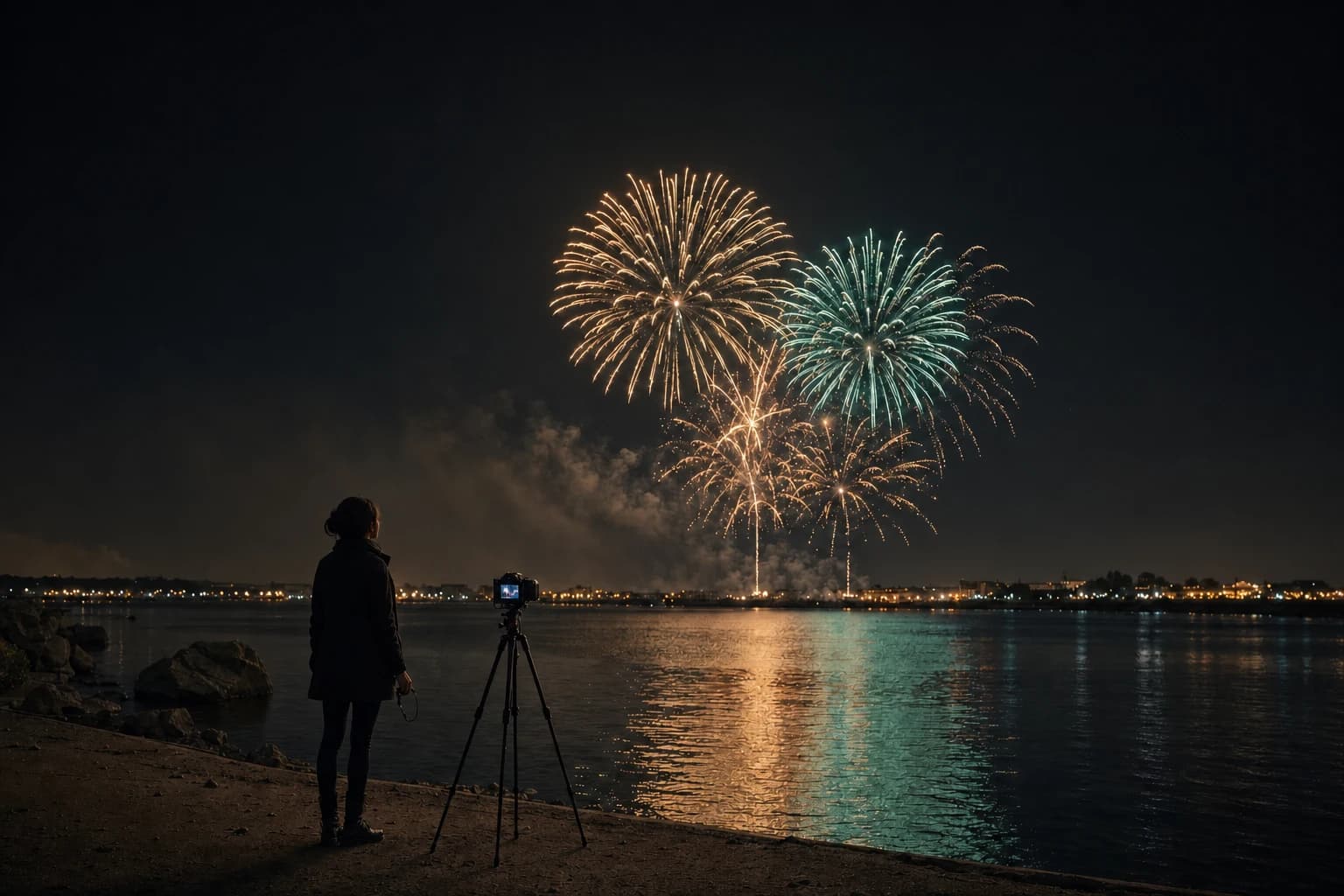
Fireworks
Fireworks shots fail bright: bursts washed to white, color gone, a sky of overlapping scribbles.
Lightning
Lightning shots fail empty: a night of frames with no bolt in any of them.
Aurora
Aurora shots fail in two opposite directions: curtains smeared into structureless green fog, or a sky so starved of light the display drowns in noise.
Fog
Fog shots fail grey: underexposed murk with nothing to look at.
Meteor showers
Meteor photographs fail invisibly: a whole night out and not one streak on the card, or hundreds of frames whose stars are all a hair soft.
The moon
Moon shots fail two opposite ways: a white featureless disc with the craters burned off, or a bright pinhead lost in a black frame.
Holiday lights
Holiday-light shots fail two ways: strings blown to bare white blobs with the colour gone, or a correct-looking string floating in dead black nothing.
Falling snow
Falling-snow shots fail invisible: the snow that filled the air is nowhere in the frame, or it's a faint grey speckle that reads as sensor dirt.
Night portraits
Night portraits fail two ways, and both come from treating one frame as one exposure.
Brought a frame back? Get the honest read.
A recipe is a starting point; a critique reads the result. Upload the night's best frame and FinalFrame returns the full diagnosis: what works, what limits the frame, and whether the fix lives at the desk or back in the field.
Criticar una foto