Monochrome
Le savoir-faire derrière une image forte, et ce qui sépare un 6 d'un 8.
FinalFrame note chaque photo de 0 à 10 : un 6 est solide, un 8 est digne d'un portfolio et un 9 est de qualité d'exposition. Comment fonctionne la notation
Voir
Monochrome is not a subject: it is a treatment, a way of seeing that spans every genre on this list. A portrait, a street corner, a mountain, a machine part: any of them can be a monochrome photograph, and none of them is one automatically. What defines the genre is the discipline of seeing the world with the hue stripped out, because the camera is about to do exactly that, and the frame will live or die on what remains. What remains is four things: tone, contrast, texture, and form. The first skill is learning to read them directly. Color is loud: a red jacket against green grass separates instantly to the eye. Take the hue away and ask what is actually left: if that jacket and that grass sit at the same brightness, they collapse into one continuous gray mass, and the separation that made the scene readable evaporates. The oldest previsualization tool costs nothing: squint. Squinting suppresses color perception and collapses the scene into its tonal masses: what still separates through half-closed eyes will separate in the print. The modern equivalent is better still: set the camera's monochrome picture profile while shooting raw, and the viewfinder previews the scene in black and white while the file keeps every bit of color information for the conversion later. The eye rehearses in mono; the raw keeps the levers.
The second skill is knowing what the treatment trades and what it buys, because monochrome is a decision, and a decision has to be for something. Removing color removes distraction, removes the date stamp of fashion and paint and signage, and redirects the whole frame toward light itself. Black and white earns its keep where the scene is built from strong light and shadow, from texture that raking light can carve, from form revealed by gradation, from graphic shape and line, and where a kind of timelessness serves the subject. It fails where color was load-bearing: the sunset that was about its own oranges, the autumn hillside that was about red against gold, the market stall that was about the riot of pigment. Convert those and the reason for the photograph leaves with the hue. So the standing question, asked before the shutter and not after: what does this frame gain in monochrome? "The color version didn't work" is not an answer. Conversion does not rescue a weak frame: it exposes one, because with color gone, tone, light, and composition are carrying everything, alone.
The third skill is tonal design, and it is the one that separates the genre's practitioners from its tourists. A strong monochrome frame is usually anchored: somewhere in it a true black and somewhere a true white, with the subject placed deliberately on the scale between them (deliberate high-key and low-key frames bend this rule on purpose, and announce it). That structure comes from the light, not the file: side light and raking light draw texture and carve edges; hard light throws crisp shadow shapes that become graphic elements in their own right; soft overcast light builds the long, smooth gradations that model form. Flat frontal light draws nothing: it hands the sensor an even gray field and calls it a scene. In this genre, shadow is not the absence of subject. Half the time, shadow is the subject.
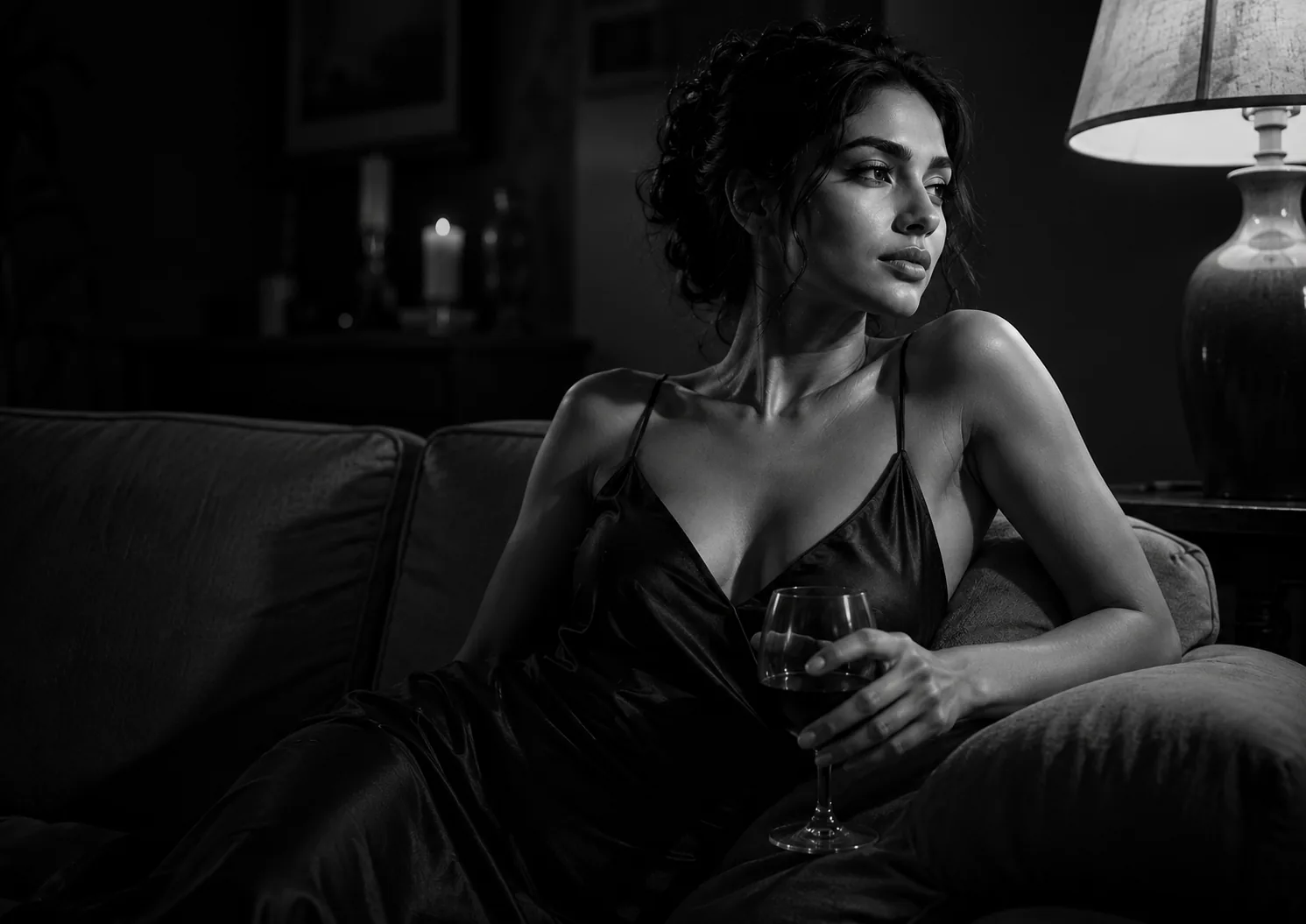
Générée par IA
Capturer
Shoot raw, in color. This sounds like a contradiction and is the genre's most practical rule: the color data is the raw material of the conversion. Channel mixing, the heart of a real black-and-white conversion, works by deciding how bright each hue renders, and it can only do that if the hues were recorded. A monochrome JPEG bakes one interpretation in and discards the levers forever. The monochrome picture profile belongs in the viewfinder, where it teaches the eye; the color belongs in the file, where it keeps every tonal decision open.
Exposure discipline tightens in this genre, because tone is the entire vocabulary. Protect the textured highlights (the sunlit stone, the white shirt, the bright sky detail) since a clipped highlight is a blank patch of paper in a medium where highlight texture is frequently the point, and there is nothing beneath it to rebuild from.
Shadows are a different contract: deep black is a legitimate and often essential tone here, so the decision is not "keep all the shadow detail" but which shadows hold texture and which are committed to black, and that is a metering decision made at the scene, not a slider found later. The classic monochrome frame spans the scale: it knows where its black lives, where its white lives, and what the subject is doing between them.
Then there is the film-era inheritance every digital shooter should understand, because it still governs the physics of the conversion: a colored filter over the lens lightens its own color and darkens its complement. Yellow, orange, and red filters progressively darken a blue sky, which is how clouds go from washed-out to dramatic in the classic landscape tradition; a red filter lightens skin; a green filter lifts foliage.
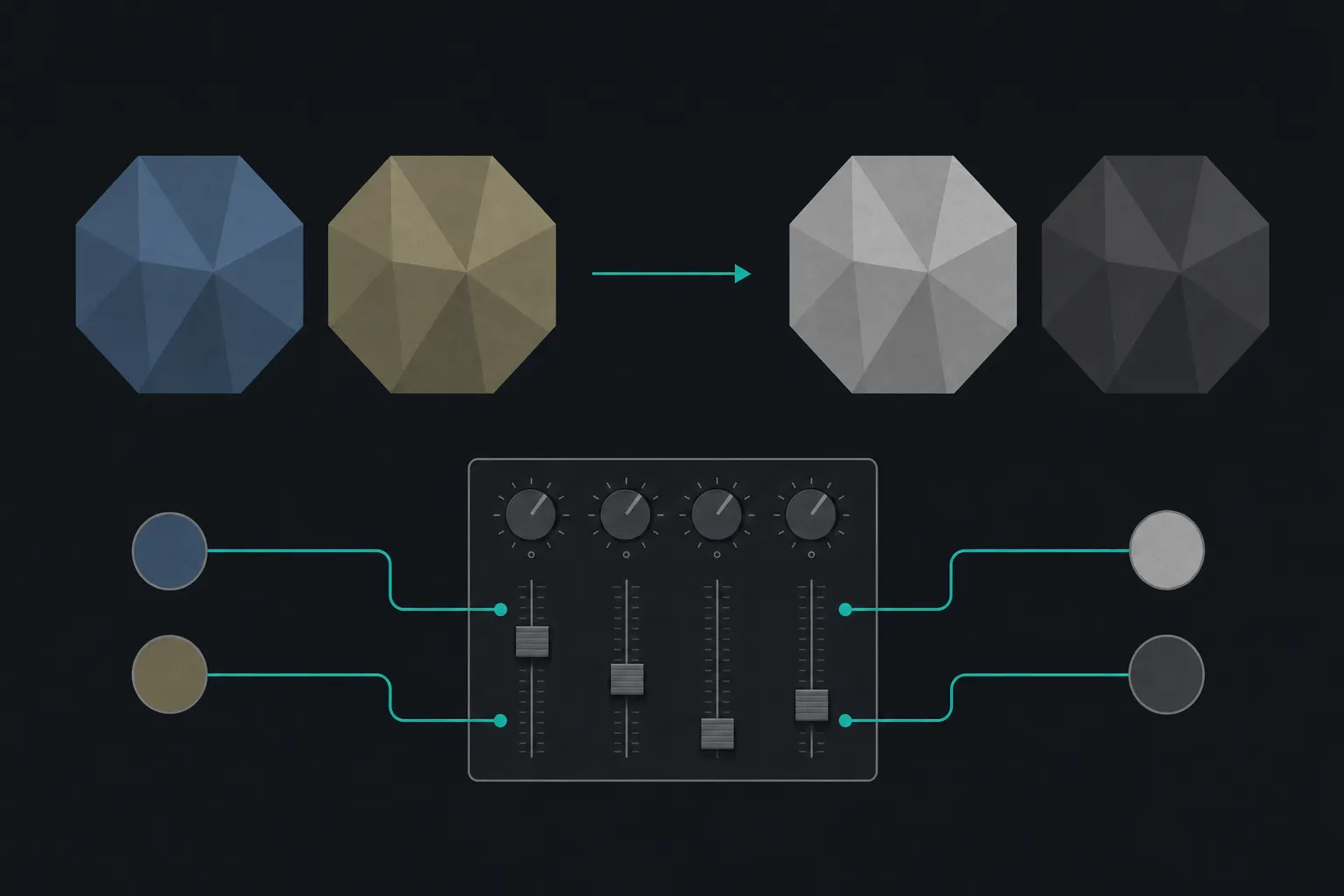
The digital channel mixer inherits this exactly: same principle, applied after the fact. But notice what that means for the capture: the mixer separates elements by their hue difference, so a scene whose elements differ in color can be pulled apart in post even where their brightness matches. A scene that is uniform in hue and flat in luminance offers the mixer nothing at all. Hue contrast recorded at capture is a tonal lever banked for later; know at the shutter which levers the scene is actually handing over.
- Shoot
- raw, in COLOR: the hues are the conversion's raw material; a mono JPEG bakes one interpretation in
- Picture profile
- monochrome in the viewfinder (it teaches the eye), color in the file (it keeps the levers)
- Highlights
- protect the textured ones: a clipped highlight is blank paper; deep black is a legitimate tone
- Filters → channel mixer
- yellow/orange/red darken a blue sky · red lightens skin · green lifts foliage
- Separation
- the mixer needs a hue OR a luminance difference: a flat, single-hue scene offers it nothing
Traiter
The conversion is the second half of the craft, and it is not a desaturate slider. Desaturation maps every color to its literal luminance and stops: red and green of the same brightness collapse into the same gray, the blue sky renders pale and merges with its own clouds, and the frame lands in the muddy middle. A real conversion is channel mixing: choosing how bright each hue becomes. Darken the blues and the sky deepens behind white cloud; lift the reds and oranges and skin turns luminous; pull the greens down and foliage recedes behind the subject. These are compositional decisions executed in tone (the same frame can be made to say different things depending on which hues are sent toward black and which toward white) and they are the reason the color raw was kept.
After the mix comes the scale. Set the black point and the white point deliberately, so the frame is anchored rather than adrift in gray, then work locally, because global contrast is a blunt instrument and monochrome is a local medium. Dodging and burning is the genre's signature tool, older than any software that implements it: lighten the path the eye should walk, deepen what should recede, and the frame is quietly recomposed in tone. The eye travels to the brightest region of a black-and-white frame first: burning down a bright corner is not decoration, it is steering. Two disciplines keep the work honest: watch the halos, because over-driven local contrast rings every edge and announces the edit; and respect the grain, because fine, even luminance grain reads as texture and honesty in this medium, while noise reduction pushed until surfaces smear reads as plastic. A monochrome frame can carry far more grain than a color one: it cannot carry smearing.
And the honest truth: the conversion can only reweight differences the capture recorded (differences of hue, or differences of luminance). It cannot separate two elements the light and the palette recorded as the same. It cannot draw a shadow edge the light never cast, and it cannot raise texture that flat frontal light never revealed. A frame with no tonal structure (even light, uniform palette, no anchoring dark or bright) converts to gray mush, and no mixer, curve, or burn rebuilds what was never there. Those failures are capture-limited: monochrome is previsualized at the shutter, where the light either carves the scene or doesn't. Editing interprets the tonal structure the capture brought back: it cannot go back and compose it.
Évaluer
Self-critique with the same lens the product uses. The FinalFrame Score is a lane-weighted blend, and the critique names ONE bottleneck, the single highest-leverage weakness in the frame, not a per-category report card. Read it as the answer to "what do I fix first," because that is exactly what it is.
For monochrome frames in the 6–7 band, the bottleneck is most often tonal separation or the treatment itself: the frame lives in the midtones with no anchoring black or white, the subject sits in the same gray register as its background so nothing pops at a glance, or the conversion reads as an afterthought (a color photograph with the color removed, rather than a frame built for tone). At 8 and above, the bottlenecks shift to refinement: the quality of the gradations, a dodge or burn that shows its hand, highlight texture on the brightest surfaces, a high-key or low-key intent held consistently across the whole frame instead of drifting.
- Shrink to a thumbnail: do the tonal masses still separate, subject from ground?
- Read the histogram: is the scale anchored at both ends, or is the frame deliberately keyed and committed to it?
- Zoom to 100% along the strong edges: any halos, any smeared grain?
- The harder question, the one that decides whether this is a monochrome photograph at all: say, in one sentence, what the frame gains from being black and white.
If the honest answer is that it hides a color problem, the conversion has not made it a monochrome frame: it has made it a hidden one.
Pourquoi un 6 n'est pas un 8
The 6 is correct, and correctness is its ceiling. The exposure holds, the conversion is clean, the subject is recognizable, nothing is technically wrong. But the frame is a color photograph with the hue subtracted: its tones cluster in the middle grays with no true black to anchor them and no bright accent to lead the eye, the subject and background share one register, and the light is merely recorded (even, frontal, uncommitted), rather than read for what it could carve. The conversion contains no decisions: sky and skin and foliage sit wherever the luminance happened to leave them. The diagnostic tell: imagine the same frame in color. If nothing would be lost, nothing was gained, and a treatment that changes nothing was not a choice, it was a filter.
An 8 is designed in tone from the ground up. The scale is anchored (real blacks, textured whites) and the subject is placed on it deliberately, separated from its ground by brightness, not by hue that no longer exists. Light is doing the work it was chosen for: a raking edge carving texture, a hard shadow laid across the frame as a graphic shape, a long soft gradation turning a surface into form. The conversion has authorship in it (a sky pulled down behind cloud, a face lifted out of its surroundings) and the dodge and burn steer the eye without leaving fingerprints. Above all, the treatment is the point: the frame is about light, tone, and form, and color would only have diluted it. The 6 shows a scene that tolerates black and white. The 8 shows a scene that demanded it, and that demand was recognized at the shutter, in the light, before the conversion ever began.
So shoot it again, for the one thing the critique named. If the bottleneck was tonal separation, go back in light that carves: put the subject against a ground that differs in brightness, not just in color, and check it with a squint before the shutter; if it was the mud of the midtones, find the scene's true black and true white and expose so both survive; if the treatment wasn't earning itself, spend a session shooting only frames that answer the question "what does this gain in mono" before the camera comes up. If the fix is real, you'll see it at the thumbnail before the score shows it: the next critique names a different limit, and the FinalFrame Score has room to move, because the frame has stopped dissolving into gray. And if the same bottleneck is named again, that is information, not indictment. Monochrome carries a dependency no other treatment does: it needs the world to draw in light and shadow, and some days the world declines (the light stays flat, the scene speaks only in color, and no conversion, however skilled, finds tonal structure the scene never offered). A repeated bottleneck here is usually naming the choosing, not the converting: which light, which scene, which hour got the camera raised. That is a reading of what the light gave the frame, not a verdict on the craft. The fix may not be a better channel mix. It may be the same street two hours later, when the sun drops low enough to carve, because the scene that goes gray at noon is often the one that goes graphic at five. The tones are out there. Go when the light is drawing them.
Leçons liées
Voyez-le sur votre propre photo
La façon la plus rapide de comprendre le score, c'est d'en lire un sur une image que vous connaissez bien.
Critiquer une photo