음식
강한 사진 뒤에 있는 기술, 그리고 6과 8을 가르는 것.
FinalFrame는 모든 사진을 0–10으로 채점해요. 6은 탄탄한 수준, 8은 포트폴리오에 어울리는 수준, 9는 전시 등급이에요. 채점 방식
보기
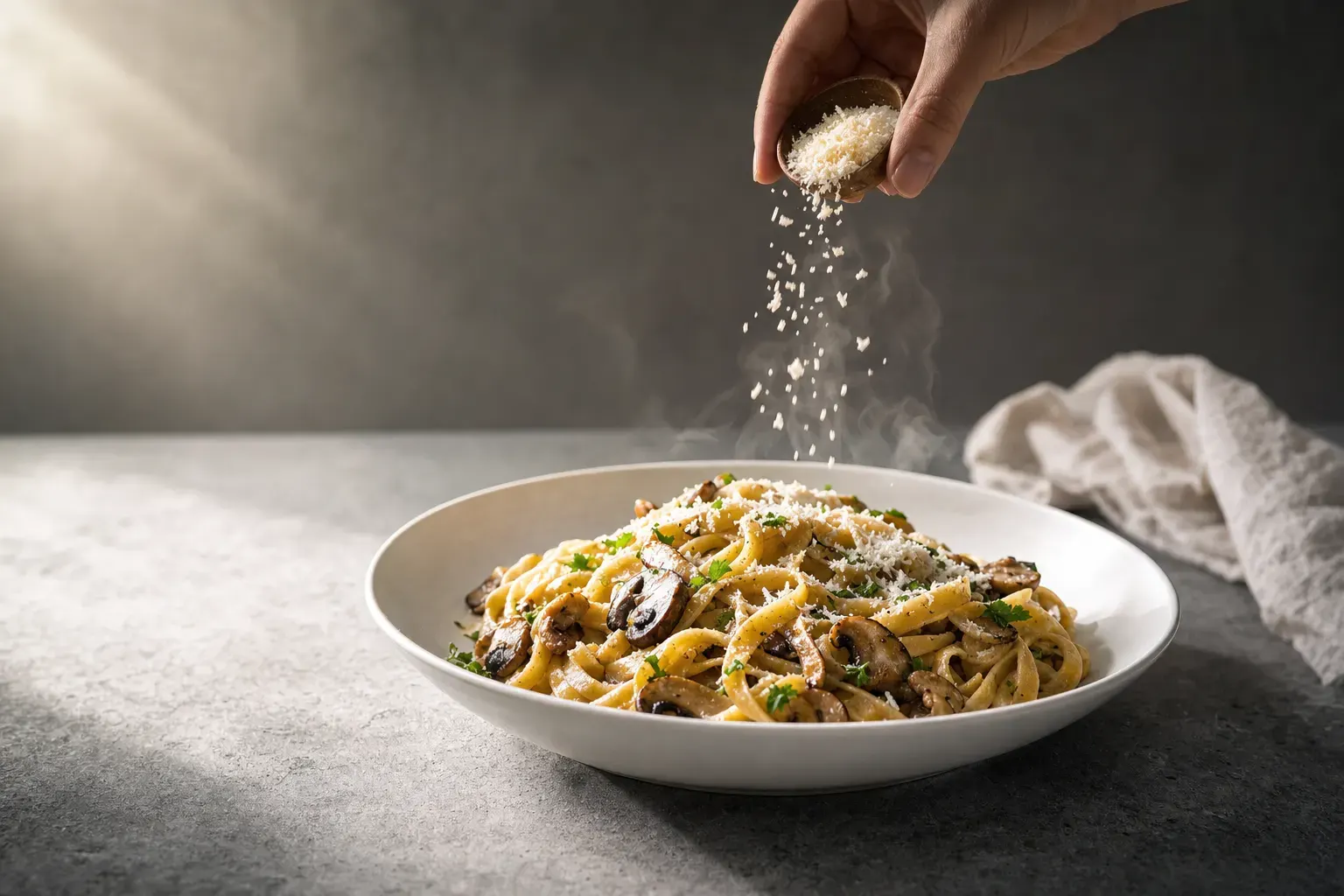
Food photography is judged by an organ no other genre answers to: appetite. A landscape can be admired; a plate has to be wanted, and the wanting is decided almost entirely by the direction of the light. Here is the genre's one non-negotiable: light from the side or from behind the food, almost never from the front. Side light rakes across the surface and casts the micro-shadows that make texture legible (the crust reads crisp, the crumb reads open, the sear reads seared) because texture is not a property the camera records directly; it is a pattern of tiny highlights and tiny shadows, and only light traveling across the surface creates them. Backlight goes one step further: it passes through anything translucent (a glass of wine, a drizzle of honey, the edge of a leaf) and sets it glowing, it puts a specular shine along the top of sauces and glazes, and it is the only light that renders steam, which needs to be lit from behind and set against something darker to read at all. Front light, and above all on-camera flash, does the opposite of everything appetite needs: it fills every texture-making shadow, flattens the crust into the crumb, and throws a flat specular glare across wet surfaces that reads as grease. One window, the food between the camera and the window or with the window off to one side, and a white card leaning in from the shadow side to keep the front from going black: that is the entire foundational studio, and it beats a bag of gear pointed the wrong way.
The second discipline is the clock, because this is the genre where the subject dies in front of the camera. Steam lasts seconds. Greens wilt in minutes; herbs go first. Ice melts, foam collapses, cheese sets, sauces skin over, a glistening sear goes matte and dull. The photograph of a plate is really a photograph of the first two or three minutes of that plate's life, which means the seeing happens before the food exists. Build the shot on a stand-in: an empty plate or a body double dish, composed, lit, focused, exposed, test-framed. When the hero lands, it drops into a finished photograph and the shutter works while the food is still alive. A frame composed after plating is a frame of food that has already started to lose.
The third discipline is the table around the dish. Styling and props are not decoration; they are the difference between a photograph of food and a picture of dinner. Every object in frame either tells the dish's story (the torn bread beside the soup, the scattered flour under the loaf, the fork that says someone is about to eat) or it competes with it. Matte, neutral surfaces and plates hold the eye on the food; glossy and patterned ones fight it. And leave negative space. A frame packed edge to edge with tabletop reads as clutter; a dish given clean room around it reads as chosen. The plate is the subject. The table is context, kept quiet on purpose.
AI 생성
촬영
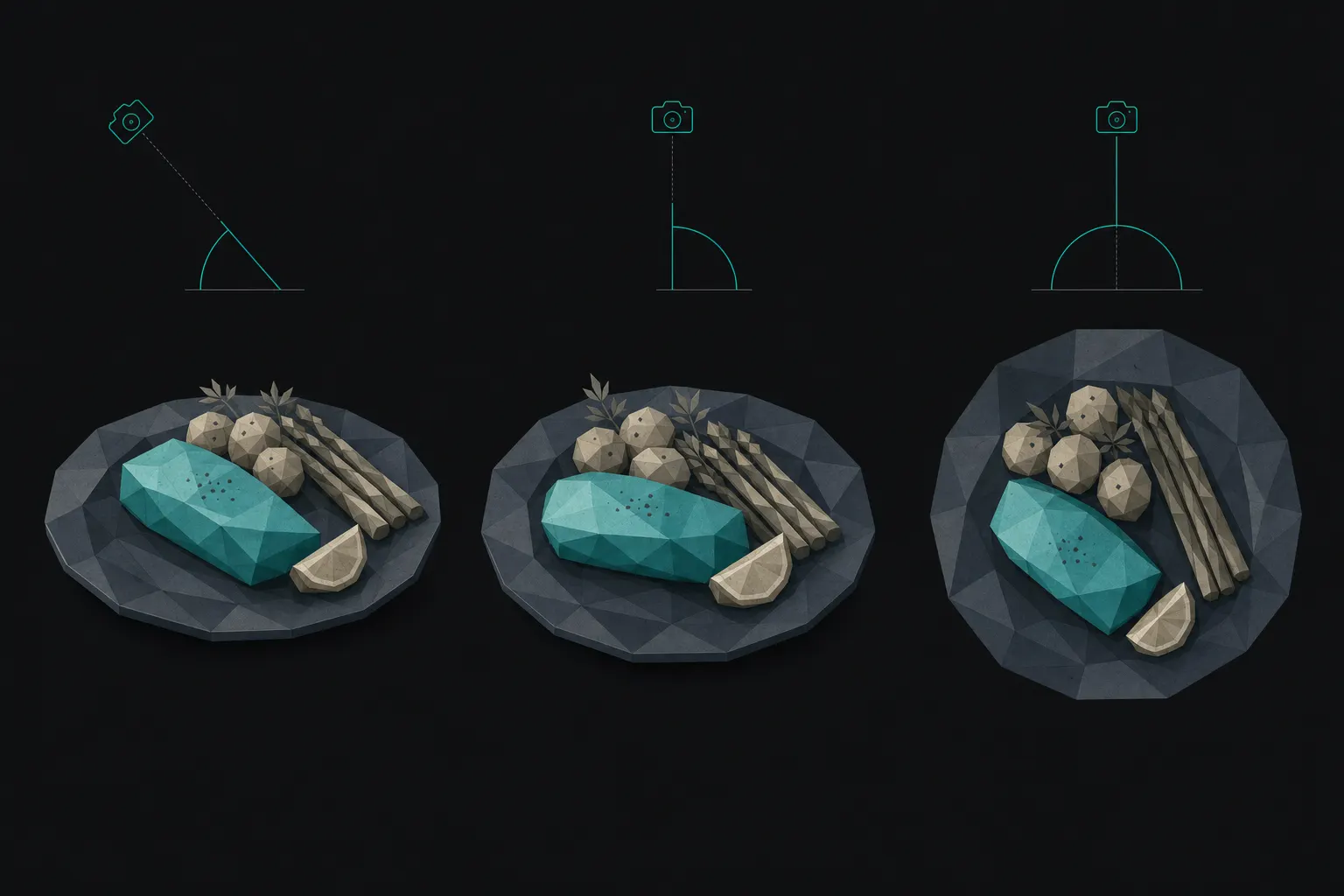
The first capture decision is the angle, and it follows the dish, not habit. Overhead (the flat-lay, camera pointing straight down) turns the shot into graphic design: shapes, colors, and arrangement on the plane of the table. It suits flat and scattered subjects (pizzas, spreads, bowls seen into, ingredient stories) and it has one mechanical demand: the camera back parallel to the table, because any tilt keystones the plates from circles into eggs and the geometry the flat-lay lives on falls apart.
The middle band, roughly twenty-five to forty-five degrees, the angle of a diner looking down at their own plate, is the workhorse for plated dishes: it shows the top and the side, surface and height at once. And straight-on, near table level, is for food whose story is vertical (the layered burger, the stack of pancakes, the tall drink) where looking down would collapse the very structure that makes the dish. Choose by asking where the dish carries its information: on its surface, look down; in its layers, look across.
Aperture is where this genre's signature look becomes its signature failure. At tabletop distances, depth of field is inherently thin (the closer the camera stands to the subject, the shallower the zone of sharpness gets at any given aperture) so wide-open food shots deliver a sliver of crust in focus and the rest of the dish dissolved into mush. Shallow depth of field in moderation: enough blur to melt the background and the far props, enough depth to keep the food itself readable. In practice that means stopping down from wide open for plated work at close range, and further still for flat-lays, where the whole arrangement sits on one plane and deserves to be sharp across it. Put the plane of focus on the hero element (the leading edge of the dish, the garnish, the drip mid-fall) because that is where the viewer's eye will land and judge the whole frame's sharpness.
A tripod earns its place here more than almost anywhere: it holds the composition while the styling is adjusted, keeps the framing identical from stand-in to hero, and buys the slower shutter that window light sometimes demands without touching the ISO.
White balance is quietly load-bearing in a way few genres match, because color is flavor information. Skew warm-to-neutral and food reads inviting; drift green or blue and the same plate reads spoiled: appetite is that literal about cast. The classic trap is mixed light: window light from one side, the kitchen's warm ceiling bulbs from the other, and the dish wears two casts no single correction removes. Kill the room lights and shoot by the window alone; one source, one cast, one correction. Shoot raw so the decision stays revisable at full quality.
Then work the freshness levers at the moment of capture. Plate slightly under-done vegetables so they hold color and structure. Add the fragile things last (herbs, dressings, the dusting of sugar) in the final seconds before the shutter. A light brush of oil restores the gloss a sear loses as it cools; a spritz of water revives greens and beads a cold glass. These are capture tools, not tricks: they put back, in front of the lens, the freshness the clock is actively taking. Shoot in short deliberate passes (frame, adjust, frame) because the tenth minute's plate cannot be styled back into the first minute's.
- Light
- from the side or behind, never the front; front light and flash flatten texture into grease
- Angle
- overhead for flat/scattered · 25–45° for plated · straight-on for tall, layered dishes
- Aperture
- shallow in moderation: stop down from wide at close range, further still for flat-lays
- White balance
- one source: kill the room lights, shoot by the window alone; raw
보정
Post carries more of the final image in food than in most genres (commercial food work is finished work, and the audience's eye is calibrated to that standard) but everything it does is amplification, not creation. White balance is the first and highest-leverage correction: neutralize the cast off something known-neutral in frame (the white of a plate, the linen) and watch the food come back to life; it is the one slider that changes whether the dish looks edible. Then contrast and texture, applied where the light already worked: deepen the shadow side a touch so the side light's modeling reads stronger, lift clarity on the crust and the sear where texture is the story, and keep it off the smooth things (a sauce or a scoop pushed through a texture tool goes gritty and wrong).
Saturation is the genre's loudest failure mode, and the discipline is selective restraint. A global saturation push turns tomatoes radioactive and greens synthetic, and the viewer's appetite instrument detects the lie faster than their eye names it: everyone knows what food looks like. Work per-color and gently: a little life back into the greens, warmth into the bake, and stop while it still looks like something that came out of a kitchen. Cleanup, by contrast, is honest work here: the stray crumb, the smear on the rim, the fingerprint on the glass (removing the accidents of plating is finishing the styling, not falsifying the food). Sharpening follows the same selective logic as everything else: on the textures that sell the dish, not globally across the soft background the aperture just paid to blur.
And the honest truth, which in food has a clock attached: post cannot rescue what the shoot decided. No slider un-wilts the greens or re-lifts a collapsed foam: the shape of dead food is recorded, not recoverable. No contrast move manufactures the texture that flat front light never carved into shadows; the micro-shadow information simply is not in the file. No edit un-clutters a table styled busy, and steam that was not lit from behind at the shutter does not exist to be enhanced. Those failures are capture-limited: the first three minutes of the plate's life, under light pointed the right way, are where the photograph is won. Editing polishes what the kitchen and the window gave the sensor: it cannot cook the dish again.
평가
Self-critique with the same lens the product uses. The FinalFrame Score is a lane-weighted blend, and the critique names ONE bottleneck, the single highest-leverage weakness in the frame, not a per-category report card. Read it as the answer to "what do I change at the next plating," because that is exactly what it is, and food is the rare genre where the next plating can be tonight.
For food frames in the 6–7 band, the bottleneck is most often the light's direction or the table's discipline: the dish is exposed and sharp, but the light arrived from the camera's side of the plate, so the surface reads flat and the textures never separate, or the frame is carried by a tabletop full of competing props and no negative space, so the dish documents a meal instead of starring in one. At 8 and above, the bottlenecks shift to fine margins: a white balance a breath too cool for the dish, a specular hotspot on a glossy sauce pulling the eye off the hero, a focus plane that landed on the rim instead of the food, a garnish just past fresh.
- Zoom to 100% on the hero element: is the sharpest pixel on the texture that sells the dish?
- Check the whites: is the plate actually neutral, or wearing the room's cast?
- Shrink to a thumbnail: does the dish separate from the table, or dissolve into it?
- The harder question, the one appetite answers before analysis does: does the frame make hunger, or does it merely make a record?
6과 8을 가르는 것
The 6 is correct, and correctness is its ceiling. The dish is recognizable, the exposure holds, focus landed somewhere on the plate. But the light is the room's (arriving flat from the front, filling every texture shadow) so the crust and the crumb sit in the same smooth register and the surface reads printed rather than cooked. The angle is the default standing-height look-down that suits neither the surface nor the layers. The table is whatever the table was: a busy cloth, a stray napkin, props that arrived by accident. And the food is a few minutes past its best (greens softening, gloss gone matte) recorded faithfully. Nothing is wrong. Nothing is chosen. The diagnostic tell: the frame answers "what was served," not "what did it taste like."
An 8 makes hunger before it makes analysis. The light rakes in from the side or glows through from behind: texture carved into legible micro-shadow, the sauce carrying one clean specular line, steam standing against a darker ground. The angle matches the dish's architecture: down onto the spread, across into the stack. The plane of focus sits exactly on the hero edge, with just enough depth to keep the food whole and just enough blur to lose the room. The styling tells one story (every prop earning its place, negative space holding the eye on the plate) and the food is photographed alive, inside the first minutes, at the peak the kitchen sent it out at. The color is warm-neutral and true, edited with a hand light enough that the plate still belongs to a kitchen and not a catalog of a kitchen. The 6 shows the dish existed. The 8 makes the viewer want the next one out of the pan, and that difference is built at capture: the window chosen over the flash, the shot built before the plate landed, the shutter beating the clock.
So shoot it again, for the one thing the critique named, and food gives you what almost no other genre does: the subject is repeatable on demand. If the bottleneck was flat light, plate the same dish tomorrow with the window behind it and a white card in front, and watch the same food become a different photograph; if it was styling, clear the table, choose two props that tell the dish's story, and give the plate room; if it was sharpness, build the frame on a stand-in and put the focus plane on the hero edge before the food ever arrives. If the fix is real, you'll see it before the score does: the next critique names a different limit, and the FinalFrame Score has room to move, because the frame has stopped losing to the light's direction. And if the same bottleneck is named again, that is information, not indictment. Food carries two constraints no willpower removes: the clock is merciless (some plates die faster than any shutter can work, the steam gone before the styling settles) and some genuinely delicious dishes are photogenically hostile, a brown braise or a beige casserole offering the lens one tone and no structure no matter how right the window. That's not a verdict on your craft; it's a reading of what the plate gave the camera. The fix may not be another aperture. It may be a garnish that gives the monotone a color to break it, a fresher plating shot in the first minute instead of the fifth, or simply a different dish that wants to be photographed as much as it wanted to be eaten. The score follows the appetite. Go make hunger.