Posing
Managing what a body says to the camera: building a gesture line the subject can hold, so the frame just past the pose catches them having forgotten the lens.
FinalFrame scores every photo 0–10: a 6 is competent, an 8 is portfolio-worthy, and a 9 is exhibition-grade. How scoring works
What it really is
Posing is taught as a catalog of positions (hand on the hip, weight on the back foot, chin down and forward) and taught that way it produces exactly what the word suggests: a person assembled into a shape and left there, holding still, waiting to be released. The catalog is not wrong. It is just not the craft. Posing is the management of what a body says, because a body in front of a camera is always saying something, and it will say it whether or not you authored the sentence. Stand a nervous stranger against a wall and the body announces the nerves: shoulders climbing, weight locked evenly on both feet, hands with nowhere to go and no idea what to do there, the neck pulling the chin back into the throat. None of that was chosen, and all of it reaches the viewer, because a stranger reads a body the way they read a face: instantly, unconsciously, and without mercy. The craft is learning the language well enough to compose the sentence on purpose (grace, ease, power, tension, whatever the picture needs), instead of transcribing the panic the moment hands you for free.
Two truths sit under everything else on this page. The first is that pose and expression are different instruments, read separately by the eye, and the body is the one most photographers ignore. A face can be doing everything right above a body that is stacked and apologetic, and the frame still reads wrong; a body that flows can carry a deadpan or an averted gaze and lose nothing. Half the evidence in any portrait lives below the chin, and almost nobody is directing it. The fashion lesson traces this same line for a garment (the silhouette it draws, the drape it hangs, the gesture that sells the cloth) and it is this page's closest neighbor; there the subject is the clothes, here it is the body itself, and the mechanics generalize the instant you stop thinking about hems.
The second truth governs how this whole lesson is used, and it is the one to resist the least: the finished pose is almost never the photograph. It is the rehearsal. A pose built well enough gives the subject a structure solid enough to forget, and the frame worth keeping usually arrives a half-second after they relax out of it, when the built line is still there in the body but the holding has left the face. The portrait lesson names this directly: the pose is the rehearsal, and the frame after the pose is often the photograph. Everything below is how to build a rehearsal good enough to collapse from.
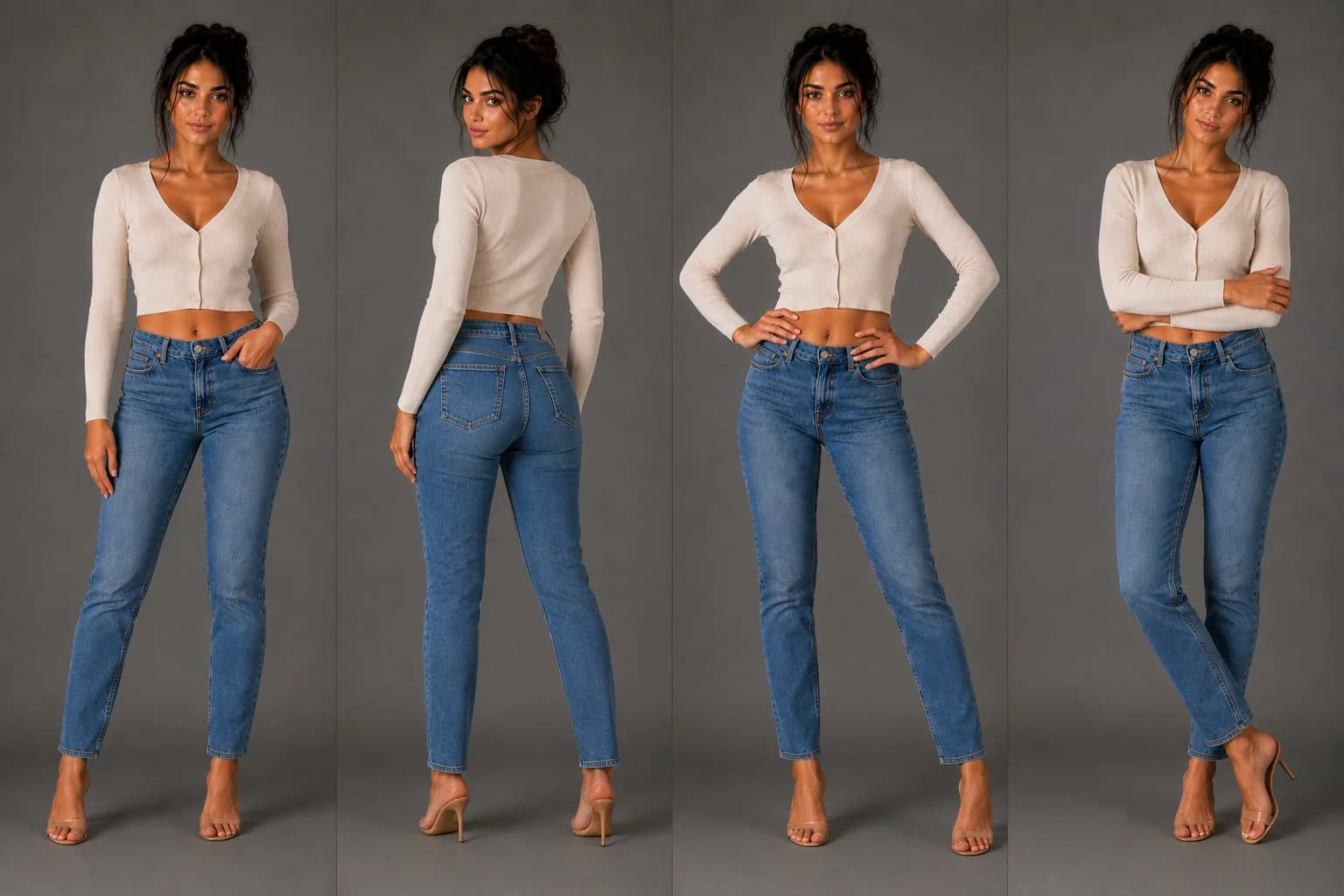
AI-generated
Why a 6 isn't an 8
A 6 is a person correctly arranged, and correctness is its ceiling. Follow the catalog and you land here: weight roughly settled, hands parked somewhere defensible, the chin not obviously wrong, the head turned off square. Nothing in the frame is a mistake, and nothing in it is alive. The body reads as furniture that agreed to be photographed: posed, in the dead sense of the word, aware of the camera and braced against it. The tell from the judging chair is one question asked of the body, not the face: does it look authored, or does it look watched? A 6 looks watched. The subject is holding a position, and the holding is visible in every joint: the locked knees, the shoulders a centimeter too high, the fingers splayed with the specific tension of a hand that was told to relax and could not.
An 8 looks caught rather than arranged. The line of the body flows, a real curve through the weight and the shoulders instead of a stack, the hands have a reason to be where they are, the neck is long, and the whole structure reads as ease even when it was built joint by joint thirty seconds earlier. Most often the keeper is the frame just past the pose, where the architecture survived but the self-consciousness drained out: the built line, minus the bracing. The distance between the two scores is not a better position from the catalog. It is the difference between a body performing stillness and a body that has forgotten the lens, and a viewer feels which one they are looking at before they can name it.
The scorecard has no posing line, and that is worth knowing before you go hunting for one. A posing failure surfaces under the names of what it broke: a stacked, centered, edge-crowding body lands as a composition or eye-flow finding; a subject who dissolves into the background because the pose gave them no line lands as subject separation; and in a portrait the stiffness reads first as the very thing the face was meant to carry: connection, expression, presence. Done well, posing is just as anonymous: the critique praises a frame that flows and credits the composition, the moment, the light, never the quiet forty minutes of direction that built the body those strengths are standing on.
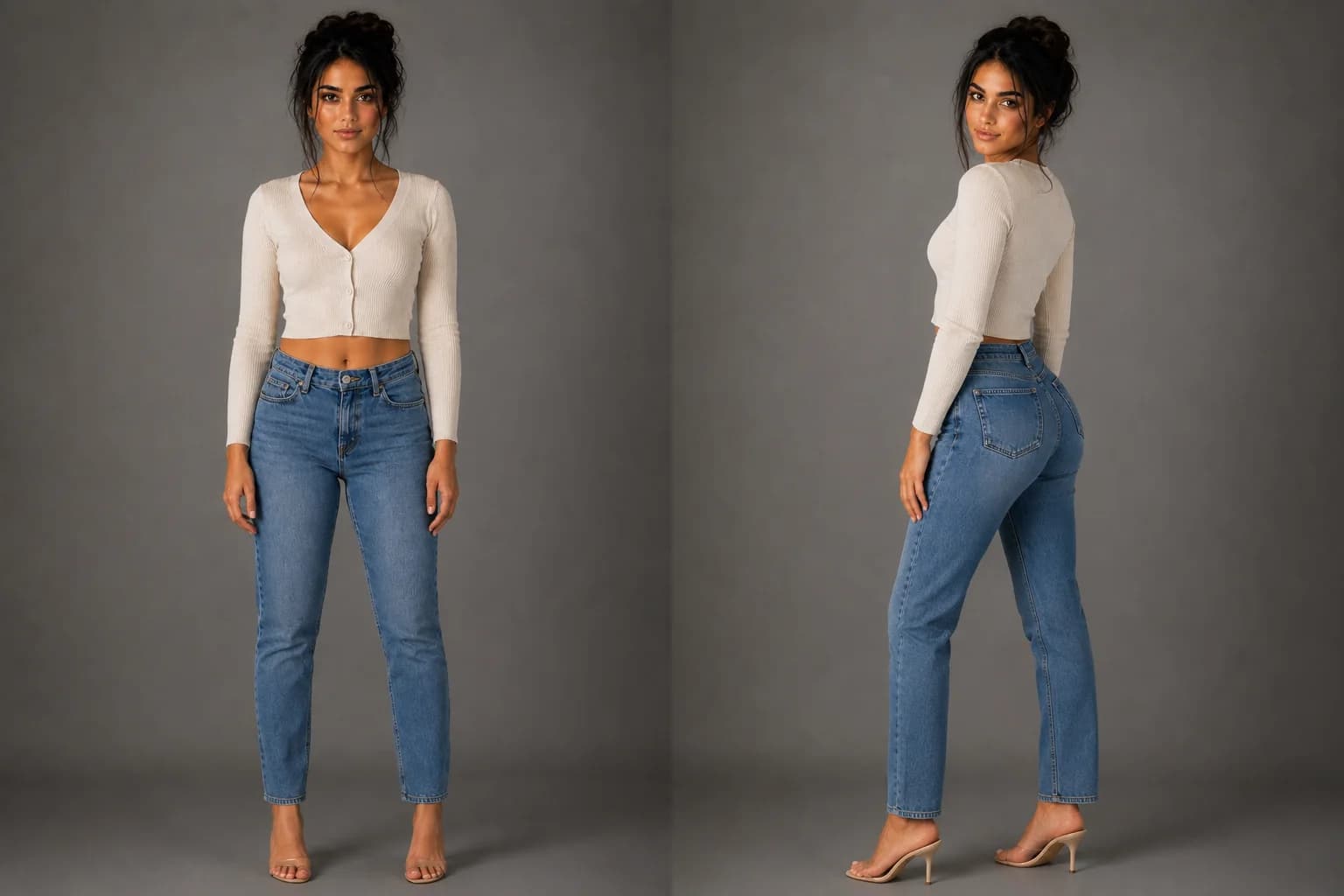
AI-generated
Before the shutter
Read the body the way you learned to read a histogram: in a fixed order, every time, so nothing gets skipped because the face was charming. The reads follow in order, and not one of them is the expression.
The line. Trace the body from crown to toe in the viewfinder and ask one thing: does it curve, or does it stack? A weight-bearing hip that pushes out, a shoulder line that answers by tilting the other way, a gentle bend somewhere in the vertical: that is the gesture line, the S that gives a static figure the suggestion of motion. A body squared up and evenly loaded, every segment stacked plumb over the one below, reads as a column: stable, symmetrical, inert. Symmetry is the enemy here more often than not, because the eye reads a broken, answering line as life and a mirrored one as a mugshot.
The weight. Find where the body's mass actually sits, because it decides everything above it. Weight split evenly across two flat feet locks the hips level and kills the pose at its foundation: it is the stance of someone standing in a queue. Shift the mass onto one leg and the whole chain reorganizes: the loaded hip rises and juts, the spine answers with a counter-curve, the shoulders settle into the tilt that makes the line. You are not looking for a position; you are looking for a commitment. A body that has decided where its weight lives looks decided; a body distributing weight equally looks like it is waiting.
The shoulders and the neck. Shoulders square to the lens make a person their widest and flattest: a slab of chest, broad and confrontational, most subjects' least dimensional angle. Turn them even fifteen degrees off square and the body gains depth and narrows honestly. Then the neck, which almost nobody watches: extended, it lengthens the whole figure and lifts the chin clear of the throat; compressed, the default of a nervous subject retracting their head into their shoulders, it shortens the person, doubles the chin, and telegraphs the discomfort straight to the viewer. A long neck is the cheapest elegance in the craft, and it vanishes the instant the subject tenses.
The hands and the jaw. Hands are where poses die, because they are the most self-conscious part of the body and the hardest to leave alone. A hand seen edge-on and half-relaxed reads as grace; the same hand flattened palm-to-camera becomes a paddle, a fist reads as a tension the frame never asked for, and fingers splayed wide are the universal signature of panic. Give them contact and a job (a lapel, a pocket edge, the opposite arm, anything with a purpose) and the tension has somewhere to go. And the jaw: a chin held level or high stretches and cleans the throat but risks looking down the nose at the viewer, while a chin pushed slightly forward and then dropped, the move that feels absurd to perform and looks right every time, defines the jawline, tightens the underside, and points the face into the light instead of up out of it.
Then run the review the way you run edge patrol on a composition: not "does the pose look good?" but "where is the body stiff?", and go hunting for it joint by joint. The locked knee, the climbing shoulder, the pinned elbow, the hand that never found its job. If you can name the stiffness, you can direct it out before the frame that matters.
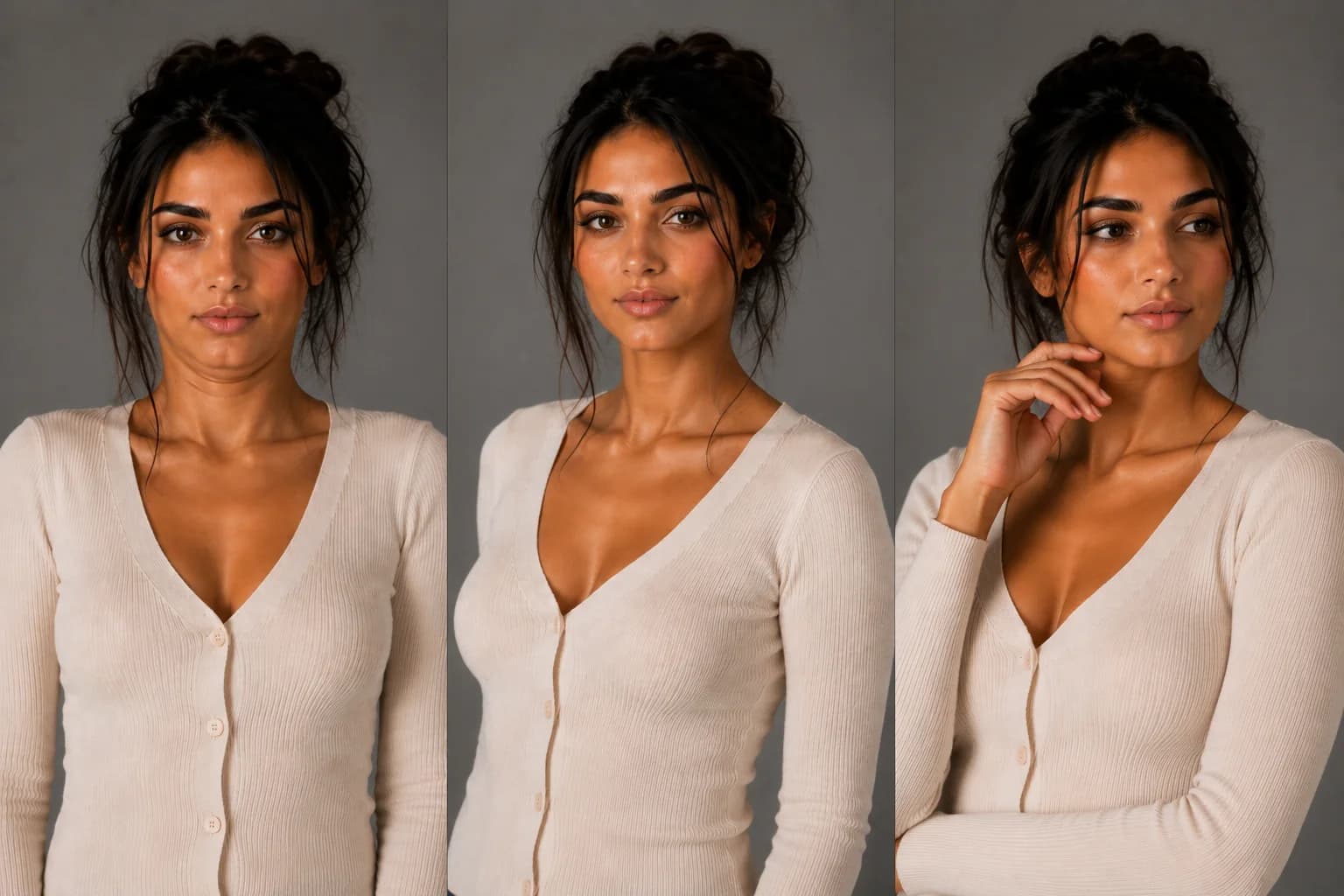
AI-generated
In-camera
Direct the body; do not describe the mood. "Look relaxed" produces a person performing relaxation, which is the exact opposite of relaxation: give the body a physical instruction it can actually execute instead. Build from the feet up, because the foundation sets the line: weight onto the back foot, let the near hip settle, ask for a small turn of the shoulders off the lens, lengthen the neck, then place the hands somewhere with a reason. Direct one segment at a time and let the subject feel each change land; a body assembled in five small moves holds better than a body handed a finished pose to imitate, because it built the thing itself and can find its way back to it.
Then shoot the transitions, not just the arrivals. The instructed position is the rehearsal; the frames worth keeping usually live in the motion between two directed poses, or in the settle just after one: the half-second the timing lesson calls shooting through the moment, aimed at the body instead of the gesture. Keep the shutter going while the subject moves from one thing to the next, and keep it going after they believe you are done. The pose you asked for is on record in the first frame; the photograph is often three frames later.
Camera height is a posing tool wearing a framing decision's clothes, and it works on the subject even when the pose does not change. Shoot from slightly above eye level and the chin comes up toward the lens, the jaw sharpens, the eyes widen, and the body below foreshortens smaller: flattering to most faces, diminishing to the body's power. Drop to the subject's eye level or below and the reverse happens: the figure gains stature and presence, the body reads powerful, and every softness under the chin is now aimed at the camera. Neither is correct; each is a statement, and the choice belongs to the picture. The one reliable error is the standing photographer aiming down at a seated or shorter subject by default: it shrinks them, balloons the head over a dwindling body, and makes the whole frame read condescending. Match your height to the statement, and when in doubt, drop.
Standing and seated pose two different problems. A standing subject gives you the full gesture line but invites the column, and the fix is always the same: break the symmetry, unload one leg, occupy the hands, get the weight off both heels. A seated subject trades the line for a new set of faults and a new set of gifts. Sitting collapses posture and spreads whatever it touches (a subject who sinks into a chair reads defeated, and thighs pressed flat against a seat spread wider than they stand) so the direction inverts: bring them to the front edge of the seat, lengthen the spine up out of the hips, angle the body off the chair's square, and let the limbs make deliberate angles rather than pile into the lap. The gift is that a seated subject has structure to lean on and surfaces to occupy the hands, which quiets the exact tension that kills a standing pose.
Reclining is the third register, and the ground is a co-author: whatever touches it flattens and spreads, and a body aimed lengthwise at the lens foreshortens (feet or head ballooning toward the camera, everything between compressed) which is why the default wrong frame here is shot from standing height, down the body's length, of a subject lying flat as if parked. Build the line sideways instead: onto one hip or propped on an elbow or both forearms, the S drawn along the ground rather than up through it, knees bent so the legs make angles instead of a slab, the neck long out of the propped shoulder. And the camera rule changes shape here: axis before height. The ballooning lives in shooting down the body's length, and it lives there at any height: a camera dropped low at the subject's feet foreshortens worse, not better. Square to the line first: shoot across the body, perpendicular to the axis it drew along the ground. Once you are square, height returns to being a statement: drop to the ground to share their plane, or rise directly over the torso for the clean look straight down; both read honestly. The one frame to refuse is the default one: full standing height, fired obliquely down the length of a parked body. In every register the principle holds: find the line, commit the weight, occupy the hands, lengthen the neck.
Groups change the problem from sculpture to staging. One body is a line you shape; several bodies are a shape you build out of lines, and the enemy is no longer stiffness: it is the row. Stand a family shoulder to shoulder in a straight rank at equal height and you get a police lineup: flat, wide, every head on the same dull horizontal, the eye with nowhere to travel. Everything that follows is how to break the rank.
Stagger the heights. The single move that rescues most group photographs is refusing to let the heads land on one line. Seat some and stand others, put a few on a step, turn the tallest inward, and arrange the heads into a soft diagonal or a zigzag instead of a level row: the eye reads a varied height-line as a composition and a flat one as a queue. Think in triangles: three heads that form a triangle read as a designed cluster, and a large group is only ever several interlocking triangles, with the strongest point (the couple, the guest of honor, the tallest or most senior figure) set at an apex the rest support.
Close the gaps and overlap. People arrange themselves too far apart, because social distance feels polite and photographic distance is closer than polite. Bodies should overlap slightly, heads lean gently toward one another, the whole cluster tightening into a single mass rather than a spread of islands: a group with air between every member reads as strangers who happened to stand near each other, and a group that overlaps reads as people who belong together. For a formal arrangement, seat the front row, stagger the standers behind into the gaps between the front heads (never directly behind them, which hides a face and stacks two heads into one blob) and set the rows close enough that the back chins clear the front shoulders.
Then the two passes nobody runs and every group frame needs. The sightline pass: crouch to the lens's height and confirm that every face has a clear lane to the camera (a head half-eclipsed behind a shoulder, a face turned into a neighbor, an eye buried in the second row) and move the body, not the head, to open it. And the everyone's-eyes pass, which is why groups are shot in bursts and never in single frames: the larger the group, the closer to certain that in any one frame someone has blinked, looked away, or dropped the expression. Fire several frames of the arranged group in quick succession so that a clean composite of open eyes exists to choose from, or, honestly, to assemble from, since a print with one face swapped in from the adjacent frame is old and legitimate group-portrait practice. This is the daily reality of event and formal coverage (the wedding party, the team photo, the reunion) where the arrangement is most of the job and the moment is whatever survives it; the event genre runs on exactly this staging, and a photographer who can build a fast, un-stiff group out of a restless crowd is doing that genre's hardest ordinary work.
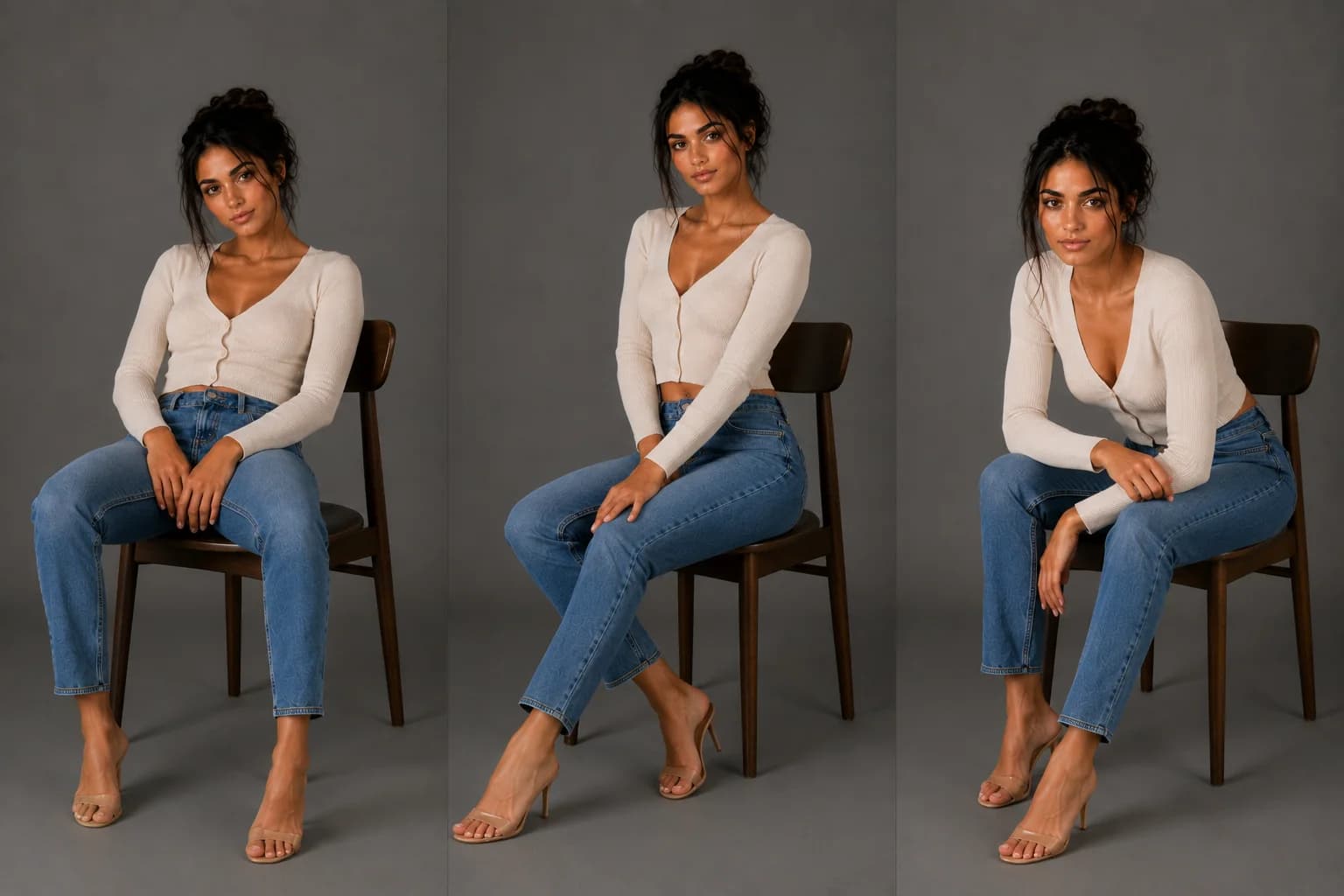
AI-generated
In post
This lesson inverts, the way focus and timing do: post mostly cannot pose. The body did what it did in front of the lens, and the geometry of that (the stacked line, the pinned elbow, the weight on two flat feet, the chin pulled into the throat) is recorded, not adjustable. A warp tool can shove a shoulder in or shave a waist down, but it drags everything attached to those pixels along with it: the background bends behind the moved arm, the stripe on the shirt curves, the straight edge of the doorframe develops a wave, and the eye that reads bodies unconsciously reads the wrongness just as unconsciously. The fashion lesson names this precisely for a garment that fell wrong (re-draping in software bends the seams and the pattern testifies) and it is truer still for a body, because we are all lifelong experts in what a human shape is supposed to do. A pose is decided by the subject's weight and your direction in the second before the shutter, which makes it capture-limited in the fullest sense this curriculum uses.
What post can honestly do is smaller, and worth doing. Crop to the line the body found: a frame that caught a strong gesture inside a weak wider composition can be recropped to the diagonal that works, the same second composition the composition lesson describes. Quiet a distraction the pose could not avoid: burn down a splayed hand at the edge, darken a competing limb so the eye returns to the face (tonal hierarchy in the service of a body). And a restrained liquify has a narrow, legitimate lane (easing a strap dig, softening a fabric bunch, a millimeter off a jawline) governed by the same rule as skin: remove the temporary, keep the permanent. Reshaping the actual body past what the fabric and the light did is where retouching becomes a claim about the person that the photograph has no right to make, and a viewer clocks the impossible shape without knowing why.
But the truest posing fix is the cull, because the rehearsal-and-collapse structure of this whole lesson only pays off in selection. The take is full of the held poses (braced, correct, watched) and somewhere in it, usually right after one of them, is the frame where the line survived and the self-consciousness left. Photographers fail this selection in a predictable direction: the tidy, symmetrical, obviously-posed frame feels safe and gets exported, while the looser frame three clicks later, the one that actually breathes, dies in the catalog for looking less arranged. Judge the take on which body looks least aware of the camera, not which looks most composed. And when none of them do, when every frame is the braced rehearsal and the collapse never came, the fix is not a slider. It is another session, more time, and the patience to keep shooting past the pose until the subject forgets you are there.
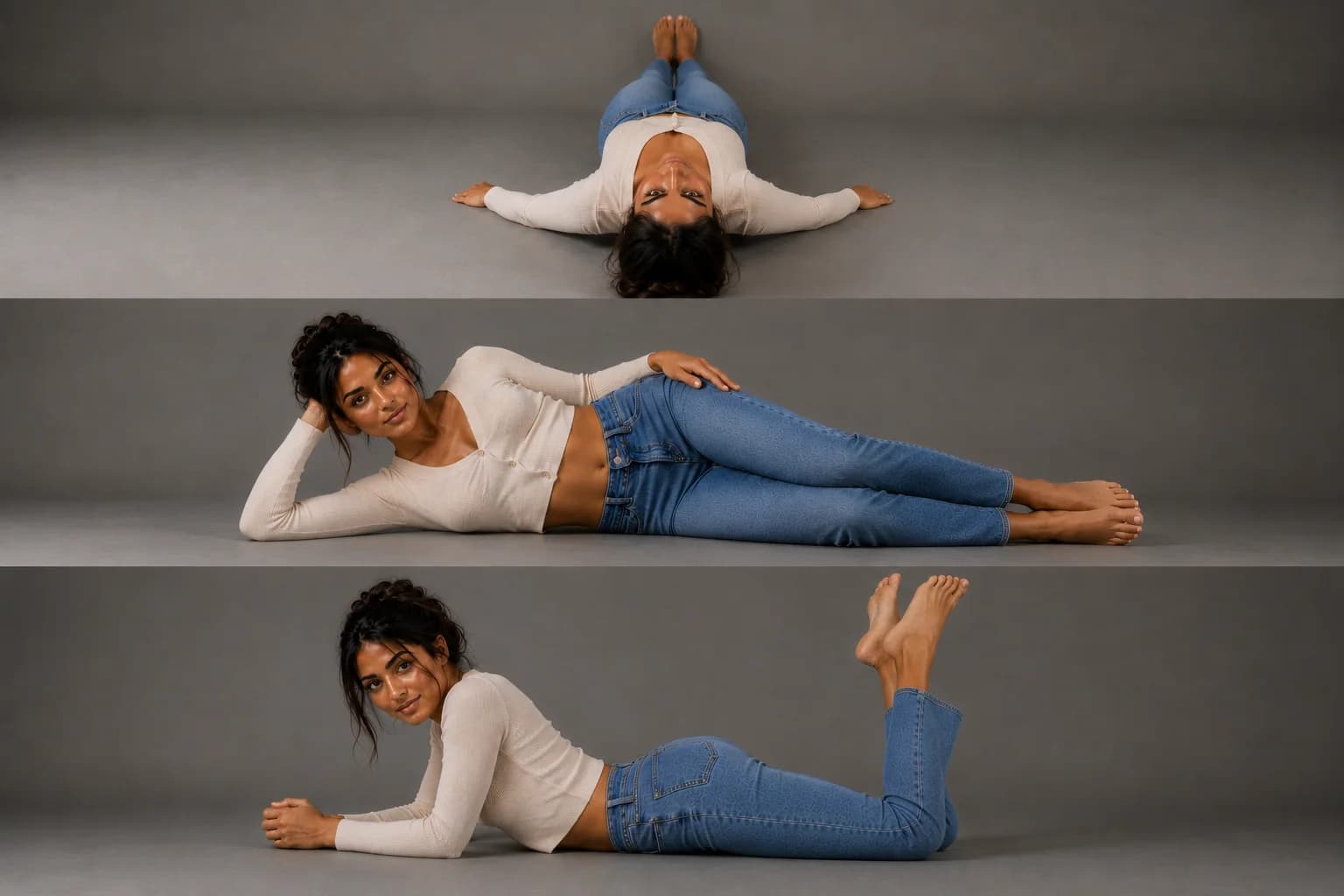
AI-generated
The ladder
- Beginner: arranges and leaves. Stands the subject up, offers "relax," takes the braced result; the body stacks, the hands panic, the weight sits on both feet, and every frame reads watched.
- Competent: knows the catalog. Weight on one leg, shoulders off square, chin forward and down, hands given a job: the positions are right and the body still holds them visibly. The mistakes have stopped; the ease has not started.
- Strong (the serious amateur's working level): builds a rehearsal to collapse from. Directs the line joint by joint, shoots the transitions and the settle, matches camera height to the statement, and culls for the frame where the built line outlived the bracing. Reliably lands a body that has forgotten the lens.
- Advanced: directs without the subject noticing. Reads and fixes stiffness at a glance, keeps a nervous stranger loose with conversation while the hands quietly build the pose, stages an un-stiff group out of a restless crowd, and treats the finished pose as scaffolding for the frame just after it, which was the one worth waiting for all along.
Go shoot it
One willing subject and one window of even light, so light takes credit for nothing and the body is the only variable, because the body is the lesson. Work them through the build you now know: weight onto the back foot, shoulders off square, neck long, chin forward and down, hands given a job (one segment at a time, and keep the shutter running the whole way, through the transitions and the settle after each held pose especially). Get at least one deliberately braced, catalog-correct frame (your control, the rehearsal on record) then keep shooting past it until you have the looser frame the pose was only ever a scaffold for. If you can, add a second person and build one small group: break the rank, stagger the heights, close the gaps, and run the sightline and everyone's-eyes passes.
Cull against the grain of your own instinct. Full-screen the take, set the tidy, obviously-posed frame beside the looser one that followed it, and ask the only question that grades this axis: which body looks least aware of the camera? Expect the trap: the arranged frame lobbying for the export because it looks safe. Pick the one that breathes. Then run the stranger test the emotion lesson uses: show both to someone who was not there and ask which person looks at ease. The control will read as posed; the keeper, if the collapse came, will read as caught.
Then close the loop, because posing is not a named bottleneck and its receipt is written in other categories. Re-critique the keeper: just that one frame. A stiff body surfaces under the names of what it broke: composition and eye-flow when the stacked line gave the eye nowhere to travel, subject separation when the pose handed the figure no shape against its background, and, in a portrait, the connection and expression a braced body strangles, because it chokes the exact things the face was there to carry. So the prediction is specific: if the body found its line and then forgot the lens, those findings should ease, and the artistic side of the FinalFrame Score has room to move with them. And if the same finding returns, that is information, not indictment: either the line was real but the frame you kept was still the rehearsal and not the collapse, or the subject never got past the mask in the time you gave them, and the fix is not a better position from the catalog but a longer conversation and more frames shot past the pose. Both are worth the session to learn. The score is not the reward: the body that forgot the camera is. That frame, the one just after the pose, is the whole reason the pose was worth building.
Related lessons
See it on your own photo
The fastest way to understand the score is to read one on a frame you know well.
Critique a photo