Three-pass read
A way to read a photograph in three passes: the whole frame first, then four axes against the whole, then one weakness ranked above the rest.
FinalFrame scores photos 0–10: a 6 is competent, an 8 is near portfolio quality (on the salon acceptance line), and a 9 is award level (accepted and in contention for a medal). How scoring works
What it means
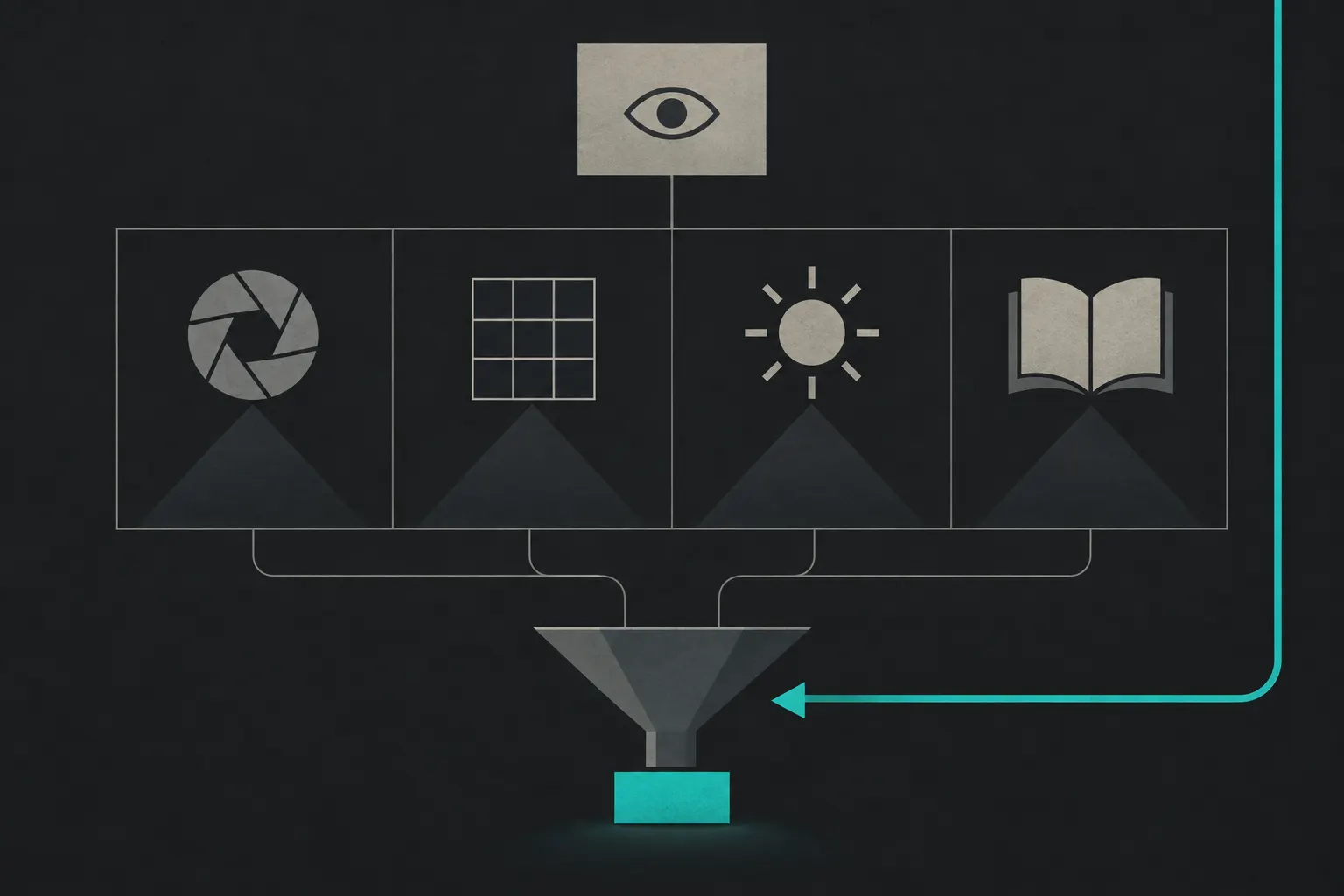
A photograph's maker never sees it cold. The maker walks the frame with a guide: the early start, the long wait, the three attempts before this one. A judge arrives with none of that and owes the picture nothing, and reading a photograph well means using that coldness instead of apologizing for it. No salon judging body publishes a procedure for reading a single image; what they publish are criteria, impact among them. But the order criticism teaches, describe, then interpret, then judge, settles into three questions, and the three-pass read is those questions asked in order. First, the photograph as a whole, before any inspecting starts: what is it doing, and does it give a stranger a way in? Second, a scan of four axes, each read against the whole frame rather than ticked in isolation: technical, composition, light, and story. Third, the close: weigh those four by what this kind of photograph is for, and name the single weakness that most limits it.
The order is the method, because the questions contaminate each other asked out of turn. Start with the loupe and the first impression is gone for good; start with the verdict and you go looking for evidence. The first look is allowed a reaction, but its only job is to decide whether the frame earns the longer look, and the scan revises it.
FinalFrame's critique is instructed to read a frame in this same order before it settles on a score. Its first pass is told to say in one sentence what the photograph is doing, then to ask whether the whole frame gives the viewer a way in, and that answer is recorded as a pass or fail. Its second pass is told to run the same four axes, each part against the whole. Its third pass is told to weigh them and name the one axis where improvement would do the most. One named problem instead of ten is the third pass doing its job: the critique ranks the limiters it can see, up to three, and shows you the one at the top. The smaller observations sit in the technical and concept notes, unranked.
Why it matters
Two photographers can receive the same list of true observations and be in completely different places. Which observation leads is what the passes decide, and a photographer who only knows the list cannot tell why a 6 is a 6.
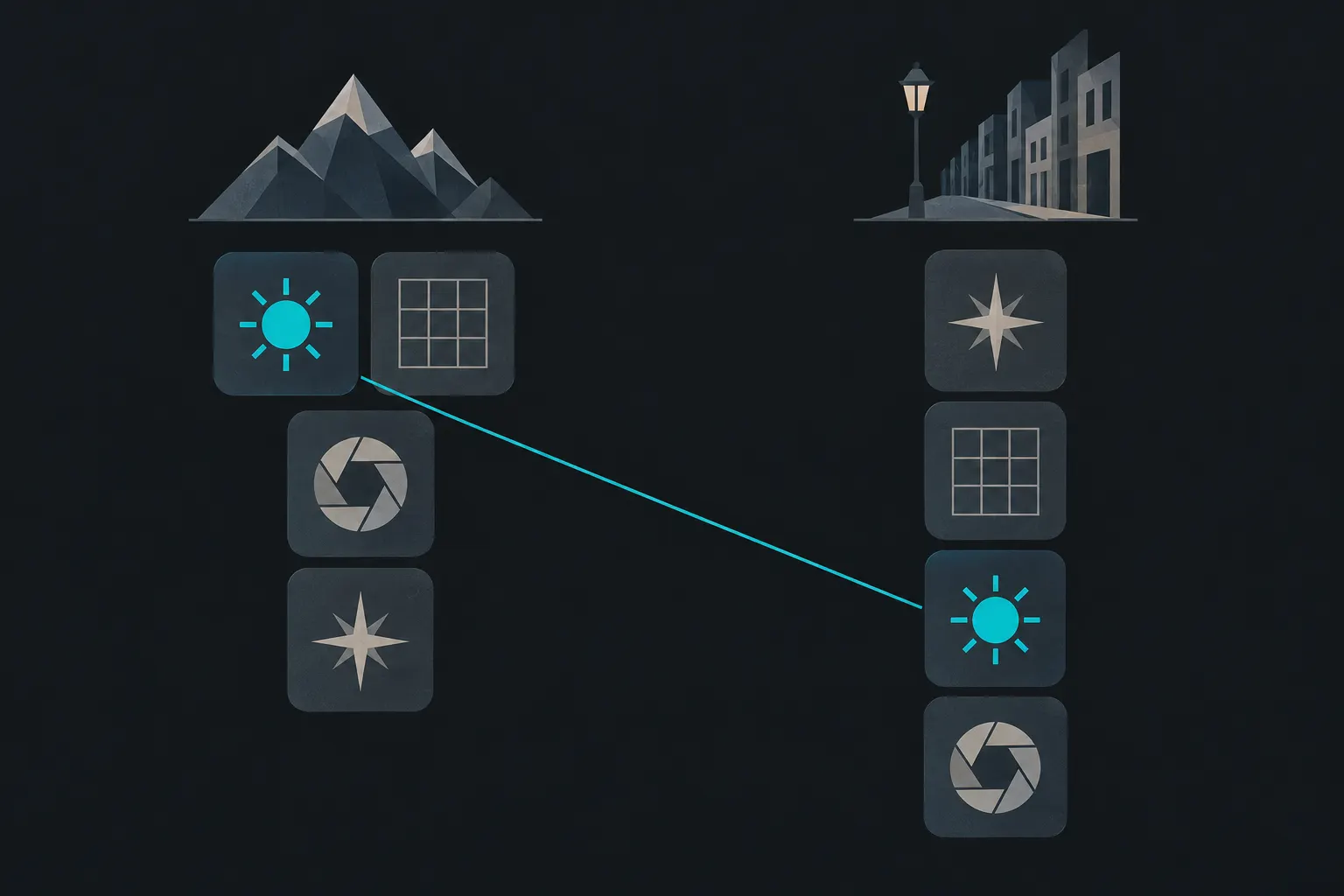
Picture a competent landscape in flat light with a mild warm cast, and a competent street frame, sharp and well exposed, with the same cast and the gesture caught a half-beat after it peaked. As lists, the two have nearly the same faults. In three passes they come apart differently. On the landscape the first read is quiet but survivable, and the scan lands hardest on light, because flat light on a landscape is the picture's medium going missing. On the street frame the first read survives too, and the scan is where it turns: the story axis finds a gesture already past its peak, and the close weighs that heaviest, because street work is read on its moment first. The close names light for one and timing for the other, and the warm cast, true in both, is the bottleneck in neither. It gets a line in the technical notes, twice. (On a critique, light the capture got wrong is labeled Timing; flatness an edit can rank, Tonal Hierarchy.)
The score follows the same logic. The product's anchor reads a 6 as competent, an 8 as near portfolio quality, and a 9 as award level. A 6 is usually a frame where every pass returned "fine" and none returned "yes". An 8 cleared the first read outright and came through the scan with only minor issues; one clear weakness still holding a frame back sits nearer 7.5. Running the passes on your own work shows you which pass never answers "yes".
In the Competition Ready and Social lanes (a lane is the purpose you pick before a critique) the first pass counts for more: the critique is instructed to keep a frame that fails the first read at B or below, whatever its technical quality, and to score it that way; in every other lane the first read is provisional and the next two passes decide. That is not harshness: impact is a stated criterion in competition judging, and a feed gives a frame a moment before the thumb moves on.
How to read it
Run the passes on your own frame before the critique does, then read the critique as a transcript of the same three questions.
Pass one, the first read. Open the frame at a size where you cannot inspect it, a thumbnail or a phone at arm's length, and give it the two or three seconds you would give a stranger's photo. Say in one sentence what it is doing. Then: did your eye find a way in, or did it slide? Write the answer down before you zoom, because once you zoom, the first look is spent. The critique records its answer to this read as a pass or fail with a one-line reason, shown on your result as the 3-second scroll test. In the Print Ready lane the same pass asks whether the frame would hold a room, and your result labels it the living room test.
Pass two, the scan. Now zoom, and take about half a minute across the four axes, asking one shape of question throughout: not "is this element good" but "does this element serve the whole". Is the sharpest plane where the picture lives? Is the subject as clear, or as deliberately withheld, as the frame intends? Does the light sculpt or flatten? Does your one-sentence read still hold up close? Those four axes are the critique's own second pass, down to a patrol of the four edges and a check for where the subject's outline merges into a same-tone background; on a shallow-depth portrait, pet portrait or wildlife frame it reads the eye pass or fail, and it evaluates light as the primary tool, never an afterthought.
Pass three, the close. Rank, do not list. Which single weakness, repaired, would move the frame up a tier rather than just tidy it? The critique ranks in two steps you never see: it lists every limiter it can perceive, one to three, most limiting first, then elects one as the single bottleneck you are shown, under Main bottleneck on your result. Read the bottleneck as the winner of that election, and its explanation as the principle it violated; the critique is asked to state the principle, not just the symptom. A five-step version for your own frames lives on its own page (the critique method): its first three steps are this first read, this scan's technical axis and this close; its last two, sorting fixable from settled and deciding whether to invest or reshoot, come after a judge's close.
The move it drives
The third pass is where the genre's weights enter, and this is the move the lesson exists to teach: the scan asks the same four questions of every frame, and the genre decides which answer counts most.
The critique carries the weighing as a table per genre, read from the genre it identifies in the frame. For a landscape, light and composition lead together, then technical, with impact last. For a portrait, eye sharpness and the light on the face lead as one, ahead of expression, with composition and technical last. For street and documentary work the decisive moment leads, then composition, then light, with technical last. For wildlife, eye sharpness leads, with behavior and composition next, except in the Competition Ready lane, where the nature story moves ahead of the eye and technical quality becomes the floor. For macro, critical focus leads. For creative and abstract work, concept leads and technical counts for the least. Notice that the table calls the story axis impact, and that in most genres an axis narrows: in a portrait the technical question becomes the eye and the light on the face, in architecture composition becomes geometry. These weights steer the judgment; they are not arithmetic the product runs on your sub-scores.
The arithmetic belongs to the lane. The FinalFrame Score is a weighted average of your two judgment scores, Artistic impact and Technical merit, with the weights set by the lane you chose: Competition Ready and Client Delivery lean 60% technical, Mood & Style and Social lean 60% artistic, and the other two sit close to even. Each lane is judged on its own.
So the move is this. Before you upload, say what the frame is for and which genre a stranger would file it under, because that decides which axis will be weighed heaviest at the close. Shot a landscape in flat light? Expect the close to name it; sharpness will not outvote it. Shot street and caught the moment late? The close will name timing whatever the sharpness says, so decide whether to spend your credit there or on the frame two shots earlier.
Common misreadings
Four ways to misread a three-pass verdict, each one costing you a re-critique.
One: treating the named weakness as the only thing the critique saw. The scan covered all four axes; the close ranked what it found, and you are shown the elected bottleneck, not the working list behind it. Re-critique and the close runs again on the new frame; it may name a limiter that was already there, which is the ranking doing its job, not the previous critique having missed something.
Two: arguing the first read with the second pass. "But the eye is tack sharp" is a pass-two fact offered against a pass-one reading, and a judge will not trade them. In Competition Ready and Social the critique is instructed to keep a frame that fails the first read at B or below, whatever the technical quality. Sharpness buys a frame the right to be looked at longer; it does not buy the look.
Three: expecting the weights to be the same frame to frame. A warm cast can lead the verdict on a product shot and be a footnote on a street frame, because the street table puts the moment first and the craft axes last, while product work puts color and material fidelity first. When two critiques name different bottlenecks for the same fault, check the genre each one read first.
Four: assuming the biggest weakness is the most fixable one. The close ranks by how much a flaw limits the frame, never by how easy it is to repair. When a candidate limiter is a permanent capture fault severe enough to bound the frame, the critique is told to elect it ahead of every editable candidate, even when an editable flaw is costing the score more. A critique naming the focus plane that missed the eye is not ignoring your fixable color cast; it is telling you the cast is not what holds the score. Which lesson to read next depends on whether the limiter is capture-limited or fixable at the editing desk.
The ladder
- Beginner: reads a critique as a list and a score as a grade. Fixes whatever is easiest, often the footnote, and is puzzled when the next critique names something the first one "missed".
- Competent: runs the first read on purpose, at thumbnail size, before zooming; separates the pass-one question (is there a way in) from the pass-two questions (is it well made) and stops arguing one with the other.
- Strong: scans the four axes against the whole, ranks before listing, and predicts the bottleneck before opening the critique; checks the genre and lane first when two verdicts disagree.
- Advanced: reads the weighting before the shutter. Knows which axis the close will weigh heaviest for the frame being made, shoots to clear it, and edits only what can still move the ranked weakness.
Try it on your work
No new shoot. This is a prediction exercise on frames you already have, and it is falsifiable, which is the point.
Pick three frames from different genres, ideally one landscape or architecture, one with a person or an animal in it, and one street or event frame; if credits are short, one frame teaches the same thing. For each, before uploading, write three lines. The first read: a thumbnail look of two or three seconds, one sentence on what it is doing, and pass or fail on the way in. The scan: one short note per axis, "serves the whole" or "works against it". The close: the single weakness you predict the critique will rank first, and the genre you expect it to read.
Now run the critiques and lay your predictions beside them. Compare your first-read call to the critique's pass or fail and its reason. Compare your predicted bottleneck to the one named, by what it says rather than by its label (a light problem is labeled Timing or Tonal Hierarchy), and your predicted genre to the one in the Full assessment header. One critique is one careful read, so a single disagreement is evidence, not proof. A frame matched on all three calls means you are already running the passes; a miss on the first read means you are still looking with a maker's eye; a miss on the bottleneck with the genre right means you know the axes but not yet their weights for that genre.
Then close the loop on the frame where your prediction was furthest off. Fix only the named bottleneck, re-critique, and watch whether the next verdict names what you predicted the first time. If it does, your scan was right and only your ranking was off: re-read the genre weighting for that kind of frame. If it names something else, the critique is weighing an axis you are not yet seeing: read that frame's genre page and run the passes again. If the critique calls the bottleneck capture-limited, the fix is a reshoot of that one thing; close the loop on your next-furthest frame instead. The score is not the reward here. The matched prediction is.
Related lessons
See it on your own photo
The fastest way to understand the score is to read one on a frame you know well.
Critique a photo