Eye Flow
The natural path the viewer's eye follows through the image.
FinalFrame는 모든 사진을 0–10으로 채점해요. 6은 탄탄한 수준, 8은 포트폴리오에 어울리는 수준, 9는 전시 등급이에요. 채점 방식
진짜 정체
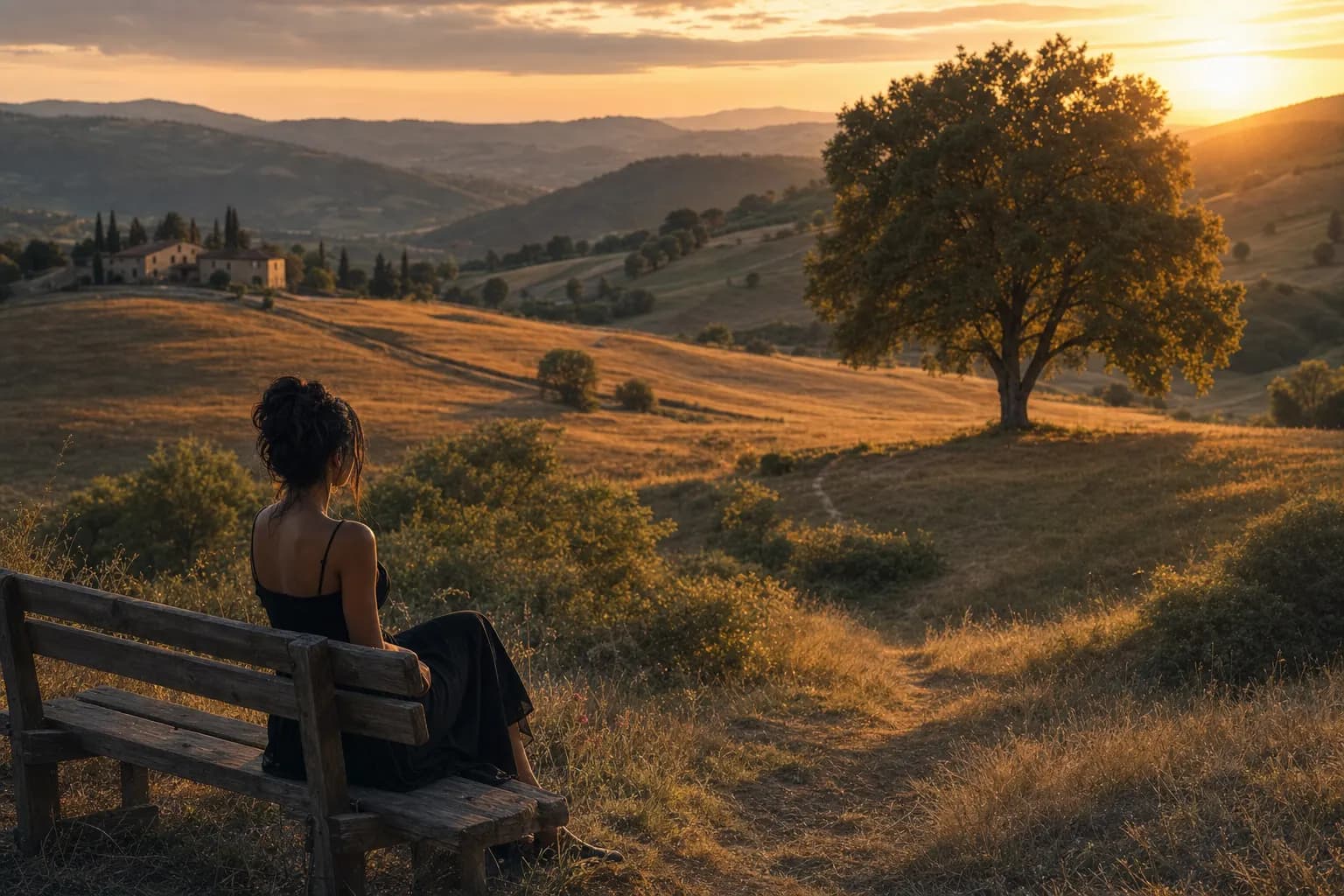
Eye-flow is the one part of composition that happens in time. A photograph is still; looking at one is not. A stranger's eye lands somewhere first, jumps somewhere second, pauses, moves again, and ends in one of two ways: it settles into a loop it is content to ride, or it slides off an edge and leaves. Eye-flow is that sequence (the order in which the eye visits the frame and the rhythm at which it travels, the rushes and the rests) and the craft is the discipline of reading it: reconstructing the walk a first-time viewer's eye actually takes, and holding it against the one the frame was built to give.
Hold the distinction from its two neighbours, because it is the whole reason this lesson exists. Composition is the blueprint: the map that authors the entire structure of entry, route, rest, and exclusion. Leading-lines is one instrument for moving the eye along a drawn route. Eye-flow is neither the map nor any single tool: it is the realized walk (what a stranger's attention actually does once every element is in place, and whether that walk is the trip the blueprint drew). A route can exist on the map and fail on the ground. Eye-flow is the ground truth.
AI 생성
6과 8을 가르는 것
A 6 is a frame the eye visits; an 8 is a frame the eye travels and won't leave. On the 6, one of two things happens, and both are failures of sequence rather than of arrangement. Either the eye lands on the subject and stalls (one stop, no onward journey, nothing left to explore) so the viewer is done in a beat and moves on. Or the eye bounces: it hits three or four elements in no particular order, finds no route between them, and slides off an edge. Both read as competent and inert, the signature of the capable middle of any field: the parts are placed, but the visit is over before it began.
An 8 closes a loop. The eye enters at a chosen point, is carried to the subject, is handed onward to a second element and a third, and each of them passes it back toward the subject rather than out of the frame: the journey circulates instead of terminating. The rhythm is controlled too: quick across the empty passages, slow at the rest where the subject lives, never snagged on a dead spot or a trap. The judge's tell is time and return: how long the eye stays inside the frame, and whether it keeps coming back. A 6 releases the viewer in a beat; an 8 holds them in a circuit they don't notice they are walking. The 6 arranges elements; the 8 sequences a journey.
셔터를 누르기 전에
Eye-flow is the one craft diagnosed by watching yourself look, and the obstacle is that you cannot see your own frame the way a stranger will, because you already know where the subject is. Memory steers your eye straight to it; a first-time viewer gets no such guide. The entire skill is manufacturing a fresh eye, then tracing what it does. Four reads.
The first-fixation. Glance away, look back, and catch the very first place your eye lands before you can steer it. A face pulls hardest, if the frame holds one; otherwise the strongest tonal contrast takes the first look, the mechanism belongs to the tonal-hierarchy lesson, and here only the result matters: where. If that first landing is not the intended entry or the subject, the journey is starting in the wrong place before it has begun.
The trace, out loud. Name what the eye hits first, second, third, then ask the question that belongs to this lesson alone: does it return to the subject, or exit the frame? A path that ends on an edge is a leak; a path that loops back is a circuit. The order is the data, and saying it aloud is what makes it visible.
Defeat your own knowledge. Flip the frame horizontally and the familiarity breaks: a path that seemed to flow suddenly stalls, because what was being read was the intention, not the picture. Shrink it to a thumbnail: the true first fixation and the big movements survive while the details being leaned on vanish. Set it down and come back later: the second, fresh glance tells the truth the first, memory-guided one hid.
Read the rhythm, not just the route. Where does the eye rush (across the empty passages that carry it quickly) and where does it pause, at the rest where the subject should live? Then hunt the two rhythm faults: the stall, where a bright or busy spot catches the eye and pins it on the wrong thing, and the scatter, where too many equal claims give the eye no order at all and it pinballs. A good flow has tempo (motion, then rest, then motion), not one flat hum, and not a pinball machine.
촬영에서
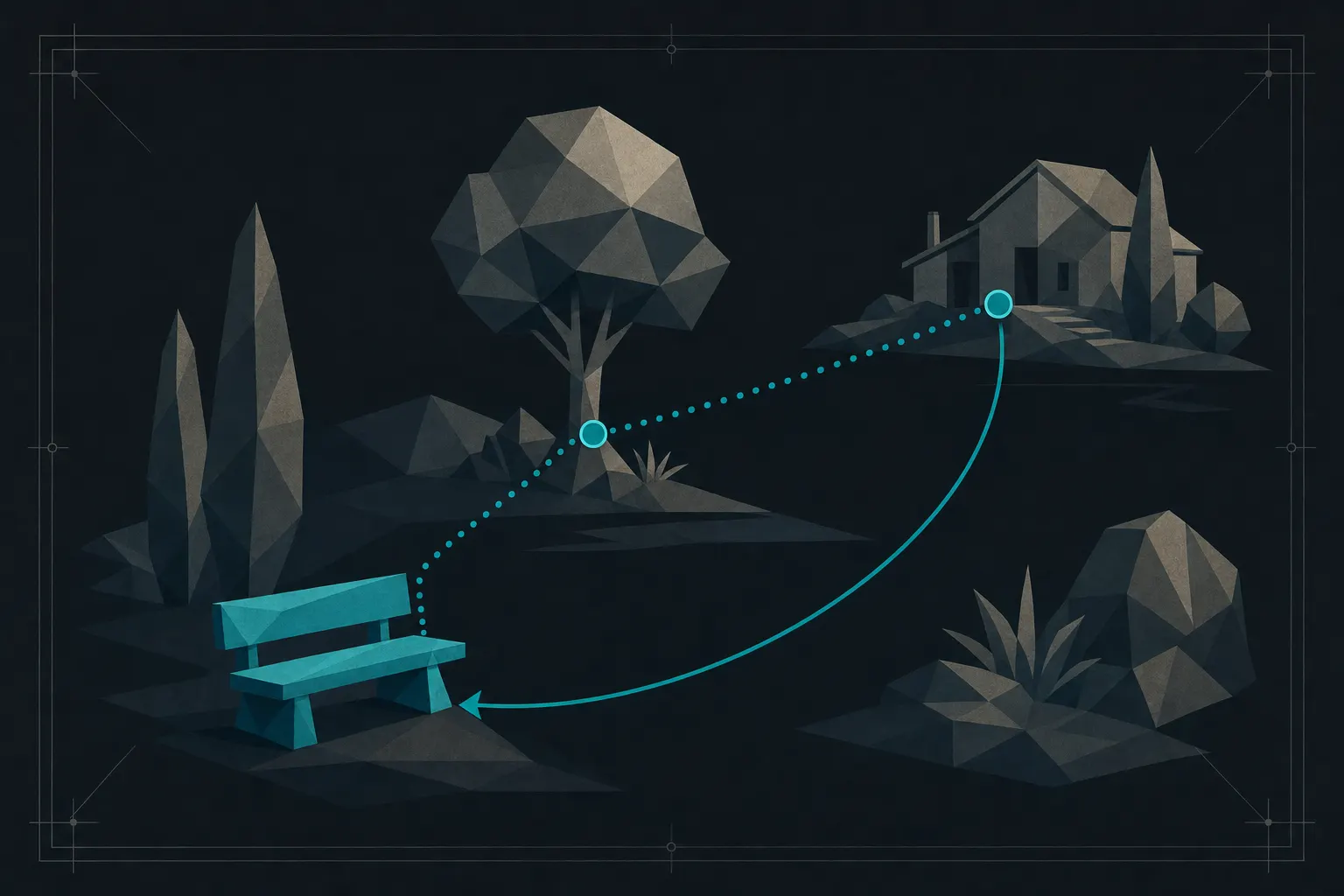
No one shoots "an eye-flow", what gets shot is a sequence, and the levers are the ones the neighbouring lessons own: a line, a tone, a gaze, a gap. What belongs to this lesson is the order they fire in, and whether the last one hands the eye back.
Start by refusing to seat the subject at the entrance. If the eye lands on the subject first, there is no journey: give it an entry somewhere else, a foreground anchor, a lower corner, a bright passage, so the eye has to travel to arrive. Then build the return: the secondary elements are stepping-stones, and each one should point the eye onward (toward the subject or back into the frame, never out of it). The four corners are where journeys leak (a line running out, a gaze aimed off-frame, a bright patch at a border) so turn them inward. A subject facing into the frame leaves the eye room to travel back; a subject facing out walks it off the edge.
Shape the rhythm with emptiness. Space is pace: a clean, open passage, the negative-space lesson's territory, is where the eye moves fast, and a cluster of detail is where it slows and rests, so the tempo is set by choosing where the gaps go and where the density goes. Give the subject a pool of quiet and the eye will stop there; crowd it and the eye rushes past, hunting for a rest that never comes. And prefer the closed shape: elements arranged so the path curves back on itself, the loop that keeps a viewer circulating, over a straight run that delivers the eye once and releases it out the far side.
보정에서
Eye-flow answers to post better than most crafts on this ladder, because re-sequencing is largely re-weighting, and re-weighting is an editor's native move. The crop comes first, and here it is a re-sequencing tool: recrop so the eye enters from a corner instead of the middle, trim away the edge patch that was leaking the journey out, or cut a stall-trap out of the frame entirely so nothing snags. That is a relocation of the entry and the exit: the two ends of the journey that decide everything between them.
Dodge and burn is the second lever, and it re-routes the eye without moving a pixel: darken the bright spot that was stalling attention on the wrong element, lift the intended rest so the eye settles where it was meant to, pull down a corner that was bleeding the path off the edge. The eye follows luminance (the mechanism is the tonal-hierarchy lesson's) so re-ranking the tones re-orders the journey. And a single clone-out of one competing bright object can convert a scatter into a route, because what it removes is a claim, though in documentary and nature-competition work that clone is off the table, and the burn must silence the claim instead.
Now the honesty clause. Post re-routes the eye among the elements the file contains; it cannot add the ones it doesn't. It cannot install a stepping-stone across an empty mid-frame to carry the eye from entry to subject, cannot manufacture the secondary element that would close the loop, cannot give a single-stop snapshot a journey it never had. When the frame is one lonely subject with nothing to travel to, or a jumble no crop can put in order, the ingredients of a sequence were never in the file: that frame is capture-limited. The honest fix is the next shoot, with the entry, the stepping-stones, and the return built in, not an afternoon in the crop tool hunting for a journey the scene never offered.
실력의 사다리
- Beginner: places the subject and considers the job done. The eye lands, finds nowhere to go, and leaves; the path is never traced, and the frame is never thought of as a journey at all.
- Competent: catches the obvious leak, after the fact. Notices in review that a gaze or a line runs the eye out of the frame and crops it back, but reads the path only once it is too late to reshoot, and cannot yet summon a stranger's fresh eye.
- Strong (the working rung for a serious amateur): traces the realized journey before the shutter. Manufactures the fresh eye with the flip and the thumbnail, seats the entry away from the subject, and turns the corners inward so the path returns instead of leaking.
- Advanced: sequences rhythm as well as route. Sets pace with gaps and density, builds a closed circuit that keeps a viewer circulating without their noticing, and withholds flow on purpose, letting a frame sit on a single deliberate stop, when the picture is about stillness rather than travel.
찍으러 가세요
Find one scene with three ingredients you can arrange: a foreground element to enter on (a rock, a doorway, a puddle); a subject to travel to: a person who will stand where asked, a tree, a bench; and open space between them. Keep the light and the subject fixed. The only variable is the journey: where the eye enters, and whether it can get back.
Shoot it six ways. (1) The closed loop: subject at the far end, the foreground element in a near corner as the entry, subject facing into the frame. (2) The leak: the same arrangement, but the subject facing out of the frame, so the eye walks off the edge. (3) The single stop: subject dead-centre at the entrance with the whole scene behind it, so the eye lands first and has nowhere to travel. (4) The stall-trap: subject at the far end again, but a bright distraction planted in a corner (your control). (5) The scatter: three elements at equal size with no route between them. (6) The rhythm frame: the loop again, but with an empty passage between entry and subject so the eye rushes, then a pool of quiet around the subject so it rests.
Import all six and read them like a stranger. On each, glance away and back and catch the first fixation; then trace out loud (first, second, third) and answer the one question: return, or exit? Flip every frame horizontally to break your own memory of where the subject is. Watch frames 2 and 4 walk the eye out of the picture, watch 3 end before it starts, watch 5 pinball, and watch 6 hold you longest, because rhythm is what keeps a viewer in.
Then run it as an experiment, not a victory lap. Re-critique the one frame where the eye entered, travelled, and looped back: just that one. This page is open because a critique named composition as your ONE bottleneck, and eye-flow is one lever inside it, so the prediction is falsifiable: if a journey that returns to the subject was what the frames were missing, the next critique should name a different limit, and the FinalFrame Score has room to move with it. If composition is named again, that is information, not indictment: either the loop closes but a brighter rival still steals the first look (the eye-thief, one lesson over in tonal hierarchy), or this scene only ever offered one honest stop and the real work lives elsewhere in the frame. Both are worth six frames to know.